Sacramento’s $75 million transportation tax falls short of November ballot
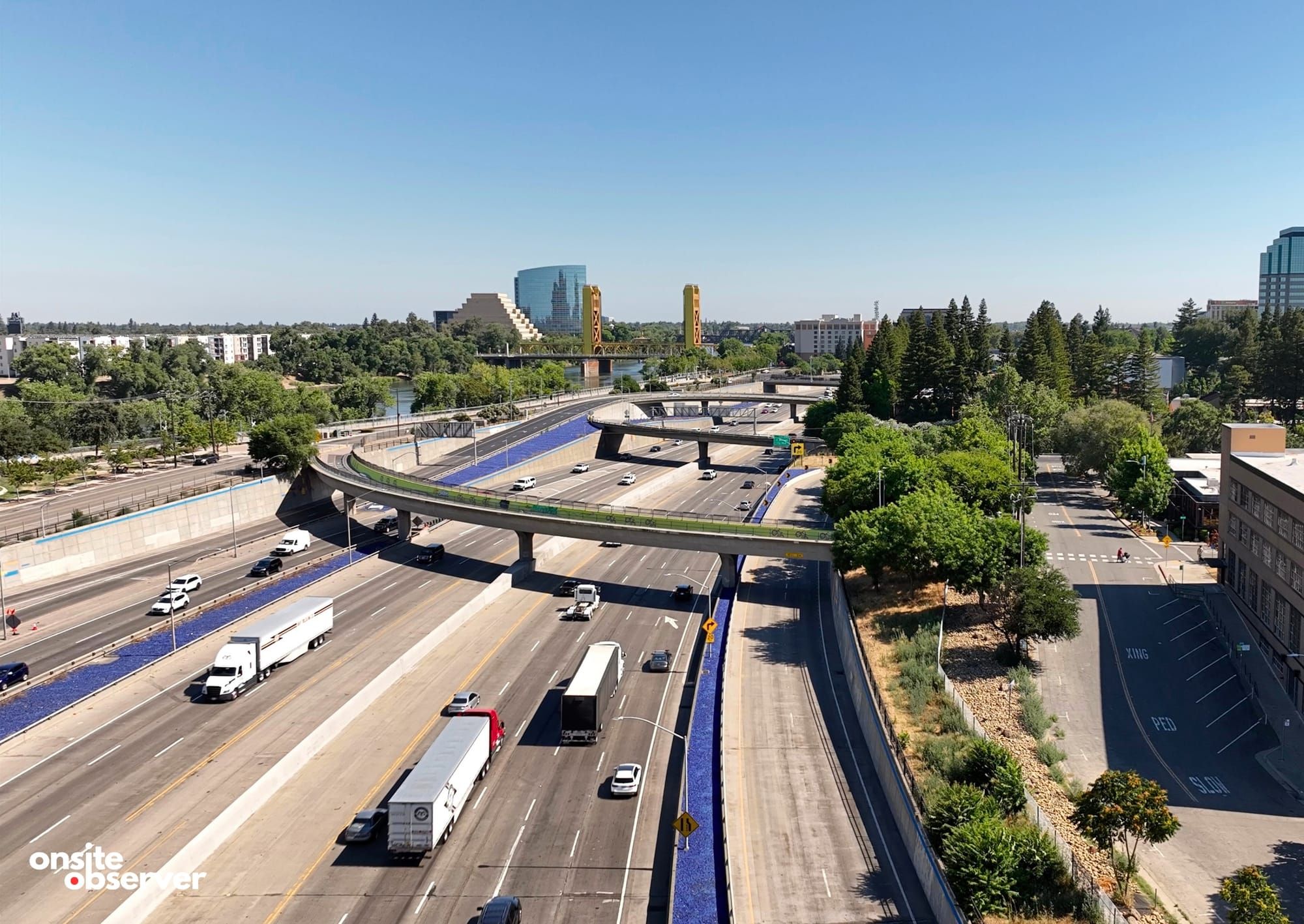
A citizen-led effort to raise Sacramento’s sales tax by half a percentage point for street repairs and public transit will not appear on the November ballot after county elections officials determined the campaign did not submit enough valid voter signatures.
The Sacramento County Registrar of Voters completed its examination July 20 and found the petition for the Sacramento Safe Streets and Affordable Transit Measure of 2026 insufficient, according to the Sacramento City Clerk’s office. The campaign had filed its petition July 1 after spending months gathering signatures across the city.

Stay ahead of what’s being built with unlimited access to local project updates, in-depth reporting and subscriber-only insights.
Organizers submitted 32,481 signatures, apparently giving the campaign a cushion above the roughly 29,000 valid signatures it expected to need. But a random sample of 3% of the petitions led elections officials to estimate that only about 25,500 of the submitted signatures were valid. The most common reason for rejection was that a signer was not registered to vote, according to information provided by the county to The Sacramento Bee.
The result ends, at least for 2026, one of the most significant attempts in years to establish a new dedicated transportation funding source within Sacramento city limits.
The measure would have raised the city’s sales and use tax rate from 8.75% to 9.25% and generated an estimated $75 million annually. Under the proposed spending plan, 48% of the revenue would have gone toward street repair, maintenance, safety projects and improvements for walking and bicycling. Another 48% would have been directed to Sacramento Regional Transit for bus and light rail service, including frequency, affordability and system improvements.
The remaining revenue would have been divided between infrastructure supporting transit-oriented housing, at 3%, and taxpayer audits and oversight, at 1%. Because the proposal was being advanced through the citizen initiative process, supporters expected it would require a simple majority of voters to pass.
Former Sacramento City Councilmember Steve Cohn, a co-chair of the Safer Sac Streets campaign, argued during an April presentation to the Sacramento Transportation Authority that the city faced major shortcomings in both road conditions and transportation safety. He described Sacramento’s pavement condition as equivalent to a “D-minus” and said the city was among California’s worst large cities for vehicle crashes.
The proposal faced strong skepticism online when Onsite Observer first reported on it April 13.
An Instagram poll accompanying Onsite Observer’s original story drew 676 responses, with 93% saying they opposed the proposed tax and 7% saying they supported it.
The poll was not scientific. Participants were self-selected, and respondents were not screened to determine whether they lived within Sacramento city limits or were registered city voters. It therefore should not be viewed as a forecast of how Sacramento voters would have voted in November.
Still, the response stood in sharp contrast to polling cited by Cohn during the April STA presentation, when he said polling conducted by the campaign showed roughly 60% support among city residents.
More than 180 comments and replies on Onsite Observer’s Instagram post also showed overwhelming resistance to another tax. Much of the criticism was less about whether Sacramento’s roads need work and more about whether residents trusted government to spend additional revenue effectively.
“Because all of the other road and transit taxes worked so well,” one commenter wrote in what became the most-liked response to the post.
Another wrote that government did not need more money but instead needed to better manage what it already collects. Several commenters questioned why existing gas taxes, vehicle registration fees and other transportation funding were not sufficient to repair roads. Others called for greater auditing and financial accountability before voters were asked to approve another tax.
Supporters were present in the discussion, though far less numerous. One commenter said the condition of Sacramento’s roads and public transit justified additional funding and expressed hope that the measure could produce meaningful improvements. Another argued that dedicated transportation funding was necessary to avoid repeatedly searching for money on a project-by-project basis.
The measure’s failure also changes the regional transportation funding picture.
When the proposal came before STA in April, agency staff warned that approval of the city tax would have pushed Sacramento to the generally applicable 9.25% local sales-tax ceiling. That could have prevented the city from participating in a future countywide transportation sales-tax measure. STA had already shelved plans for a broader countywide measure until at least 2028 after polling showed insufficient support.
With the city measure now off the November ballot, Sacramento will not reach that ceiling through the Safe Streets proposal, leaving open the possibility of including city residents in a future regional tax proposal.
Supporters have also raised the possibility of pursuing the Safe Streets measure again in 2028, but the rules governing such an effort could become substantially more difficult.
California voters will consider Proposition 43 this November, a constitutional amendment that would require citizen-initiated local special taxes to receive two-thirds voter approval beginning Jan. 1, 2027. Under current law, voter initiatives can impose such taxes with a simple majority.
That means a similar Sacramento transportation tax brought forward in 2028 could need substantially more voter support than the 2026 proposal would have required.
Author

Vitaliy Moskalenko is a development reporter passionate about documenting how communities grow. Through Onsite Observer, he delivers site visits, drone footage, and research-driven stories that bring transparency and context to local development.