Inside the latest construction progress at Sacramento Railyards
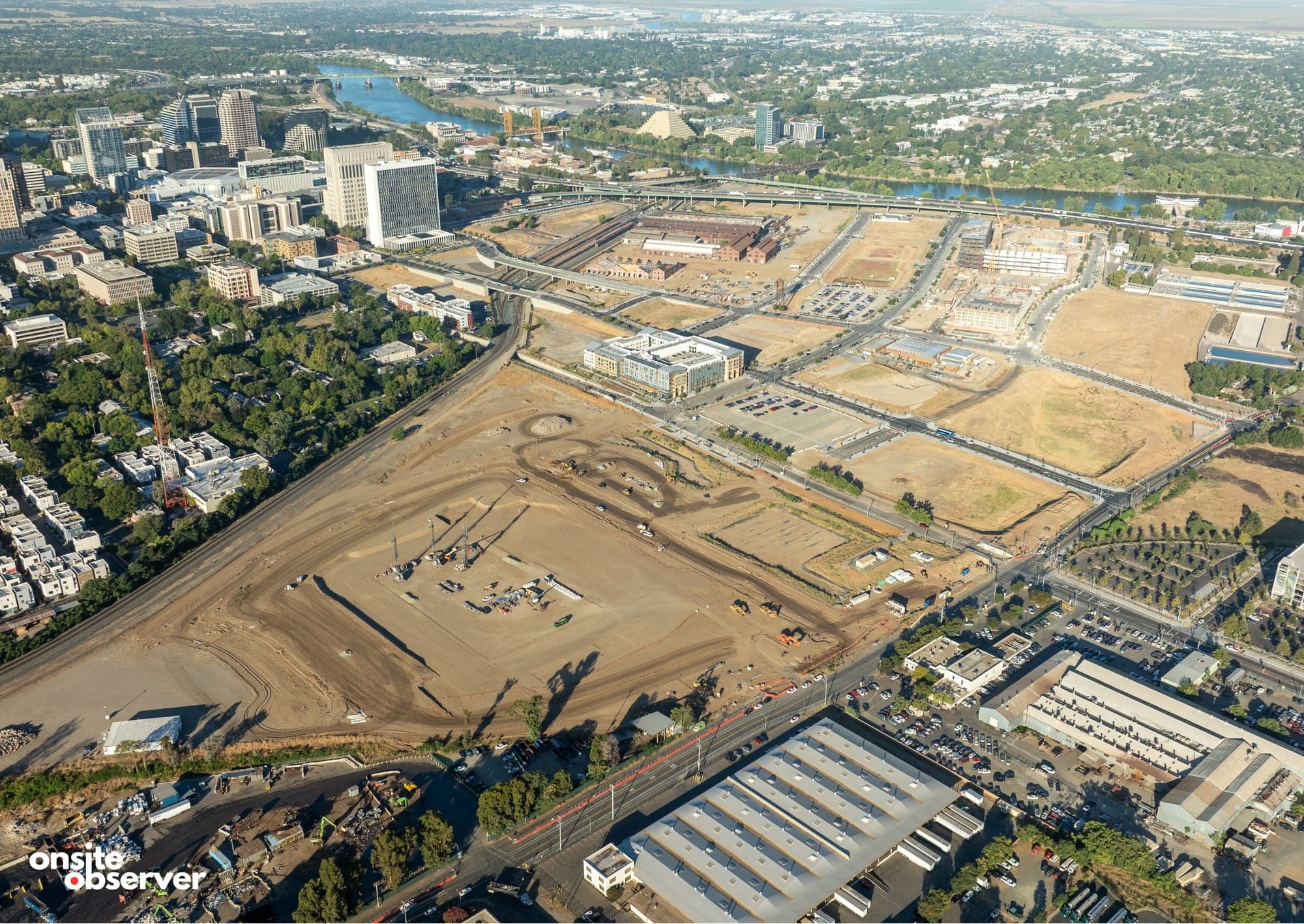
A year ago, much of the northern end of Sacramento’s Railyards was still in the grading phase with construction equipment scattered around an 18-acre site. By July 28, steel for Kaiser Permanente’s new hospital had climbed several stories above Railyards Boulevard and a concrete parking garage was rising beside it. Crews were also working on two more major construction sites within a few blocks.
Onsite Observer flew a drone over the 244-acre Railyards property that morning to document the latest work.

Stay ahead of what’s being built with unlimited access to local project updates, in-depth reporting and subscriber-only insights.
The aerials show Kaiser’s medical campus well into vertical construction. The steel frame for the 662,050-square-foot hospital building appears nearly at full height with cranes towering over the structure. To the east, the parking garage is also nearly topped out, with crews working on the upper deck.
Video of the Railyards and the latest construction progress, captured July 28, 2026.
Once fully complete, the $1.5 billion campus will include 310 licensed beds in private rooms, 14 operating rooms, a 70-bay emergency department and a 48-bed intensive care unit. A 173,000-square-foot medical office building is also planned for the site.
Kaiser is building the hospital as California health systems approach a 2030 deadline for acute-care facilities to meet stricter seismic standards. The Railyards campus will eventually replace Kaiser’s roughly 60-year-old Morse Avenue hospital and is being designed as an all-electric facility.
South of the Kaiser site, construction has exposed the structural framing of one of the Railyards’ oldest buildings. The Paint Shop was part of the Central Shops, the industrial complex where generations of railroad workers maintained locomotives and railcars. Its exterior brick walls remain standing, but the July 28 aerials show large sections of the roof removed, exposing the trusses below. New decking has been installed over portions of the building as crews rebuild it for a use far removed from its railroad past.
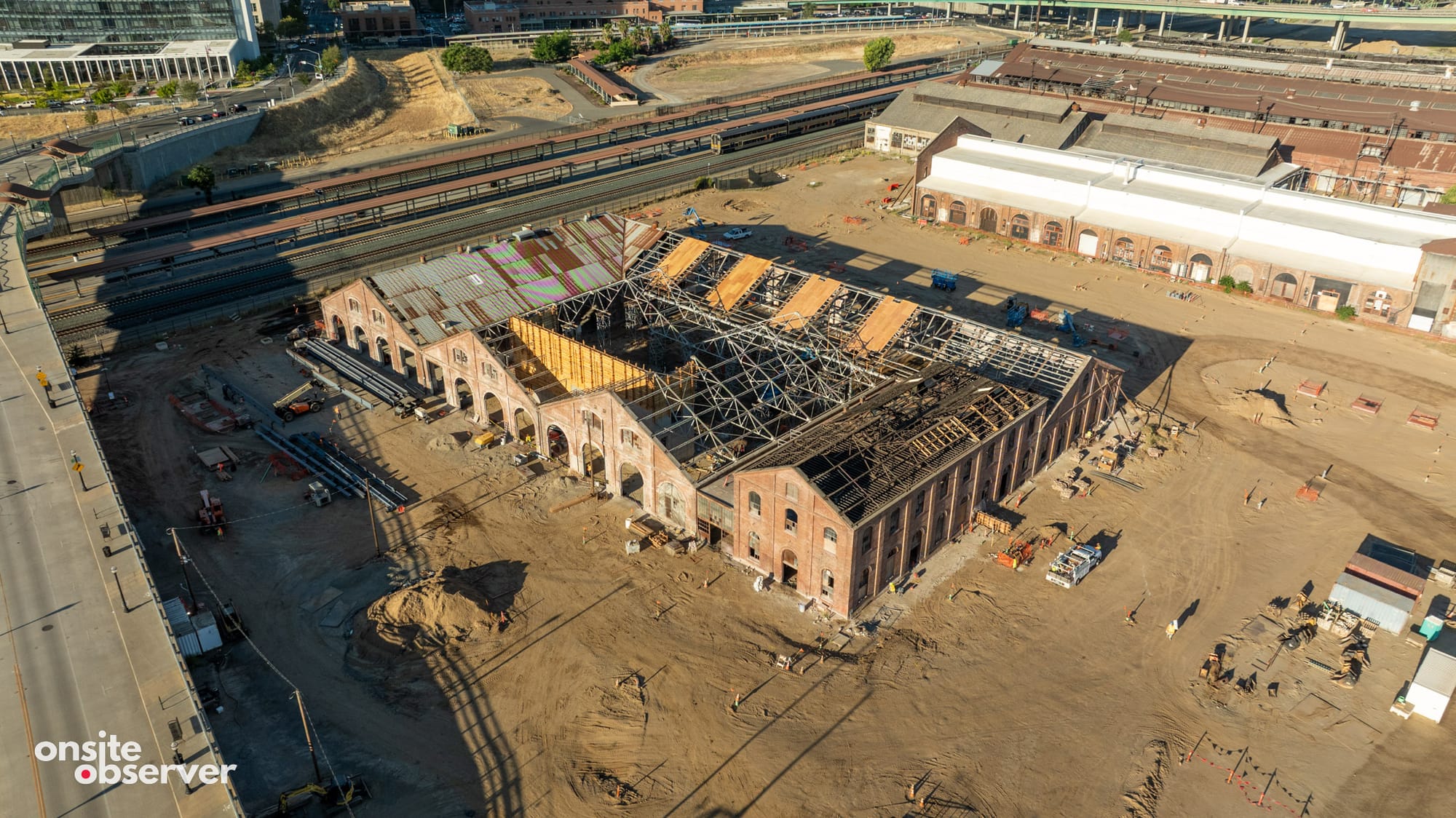
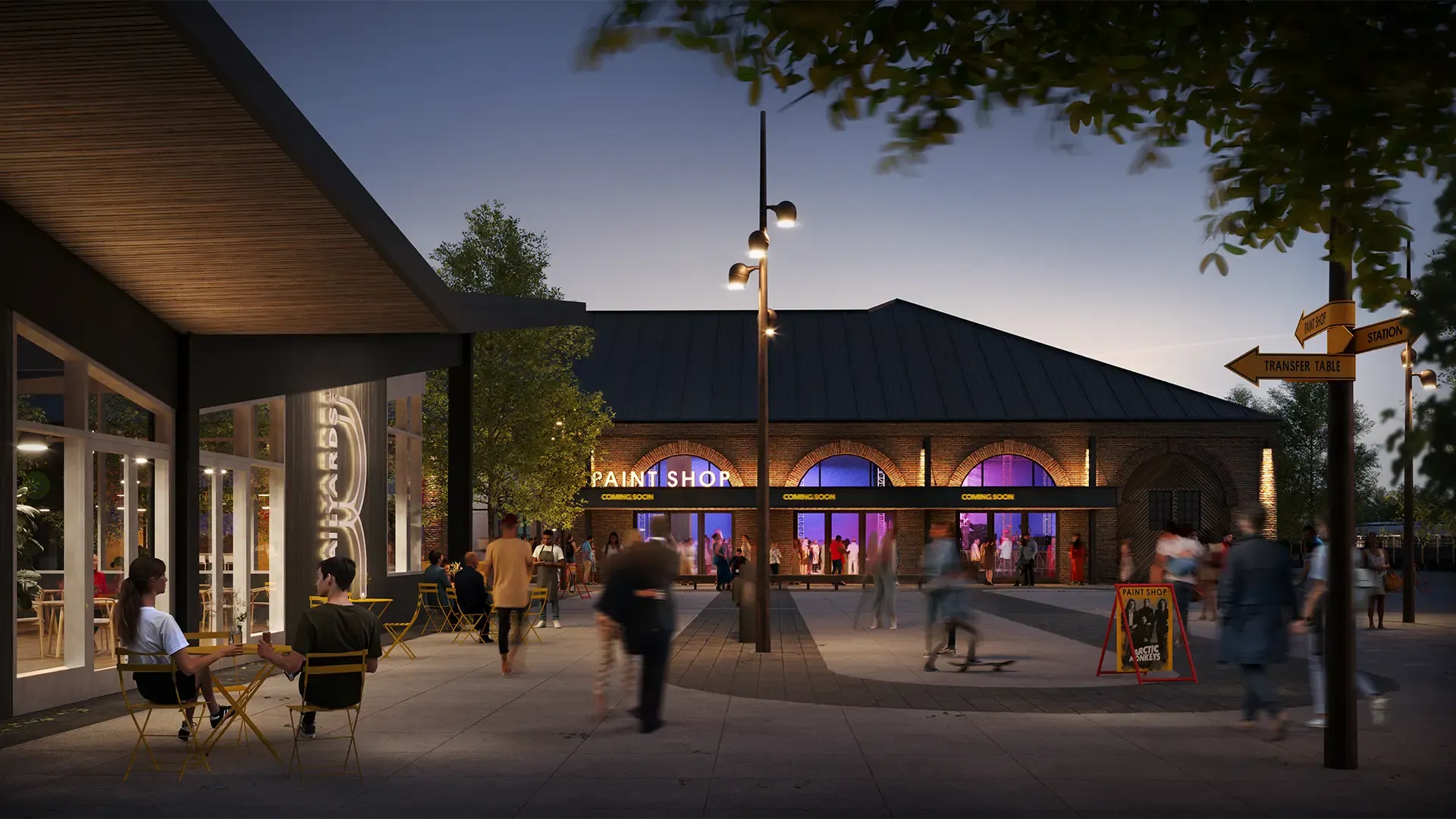
Plans call for a concert and event venue capable of holding about 3,700 people. The development includes roughly 47,700 square feet of live-event space along with bars, offices and other supporting uses. A city term-sheet presentation previously estimated the Paint Shop investment at $75 million and another $20 million for infrastructure within the Central Shops.
The city lists fall 2027 as the expected opening. Current leasing materials anticipate more than 120 concerts and events annually and are marketing surrounding space for restaurants, bars and smaller retailers, businesses that would depend heavily on the crowds generated by the venue.
Work outside the Paint Shop is proceeding at the same time. Crews have begun construction on the Central Shops Plaza, and the city is preparing a new northern entrance to Sacramento Valley Station. The entrance will connect the station’s passenger tunnel directly to the Central Shops, giving Amtrak and Capitol Corridor passengers a more direct walking route to the Paint Shop, Kaiser campus and stadium.
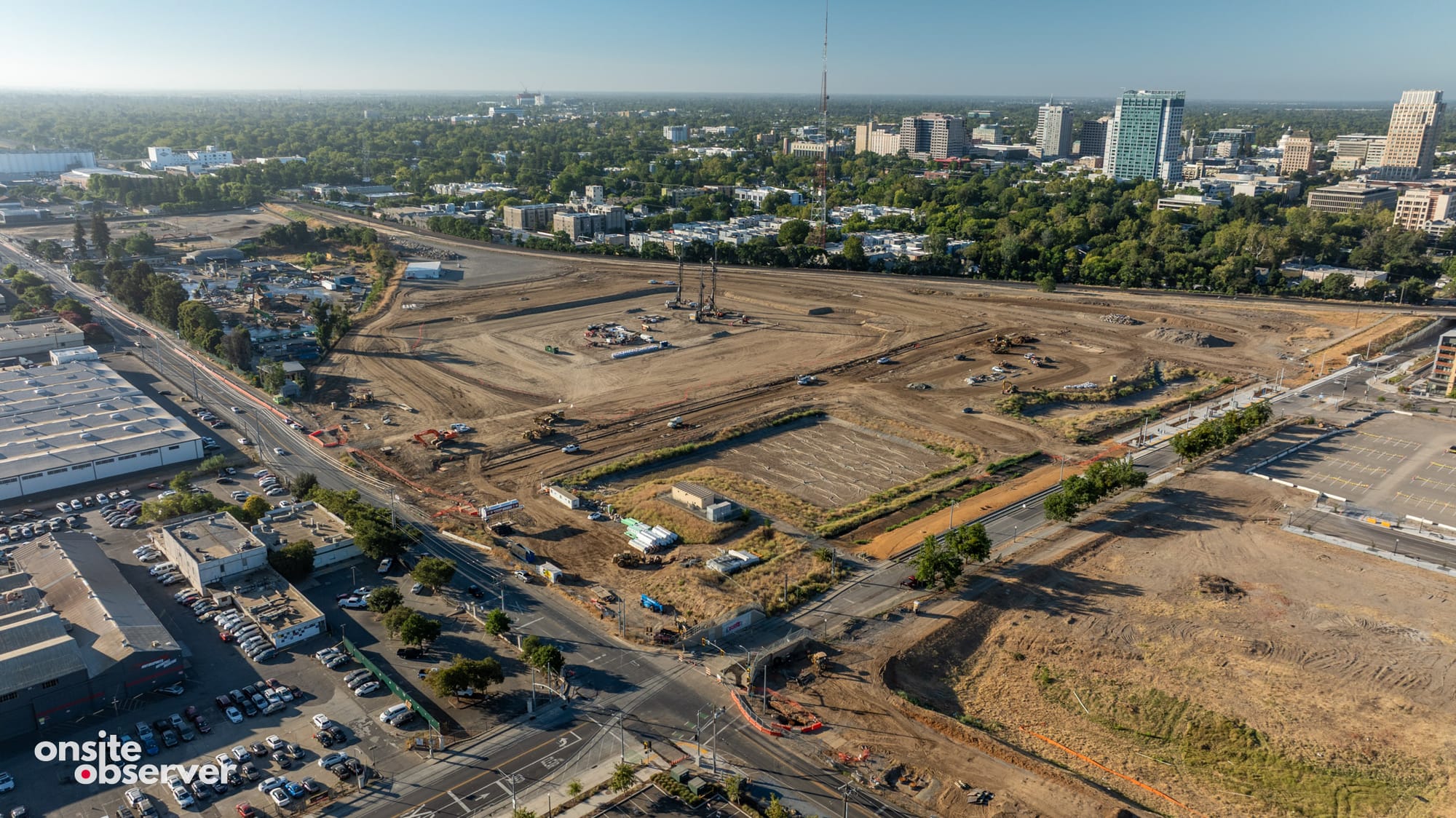
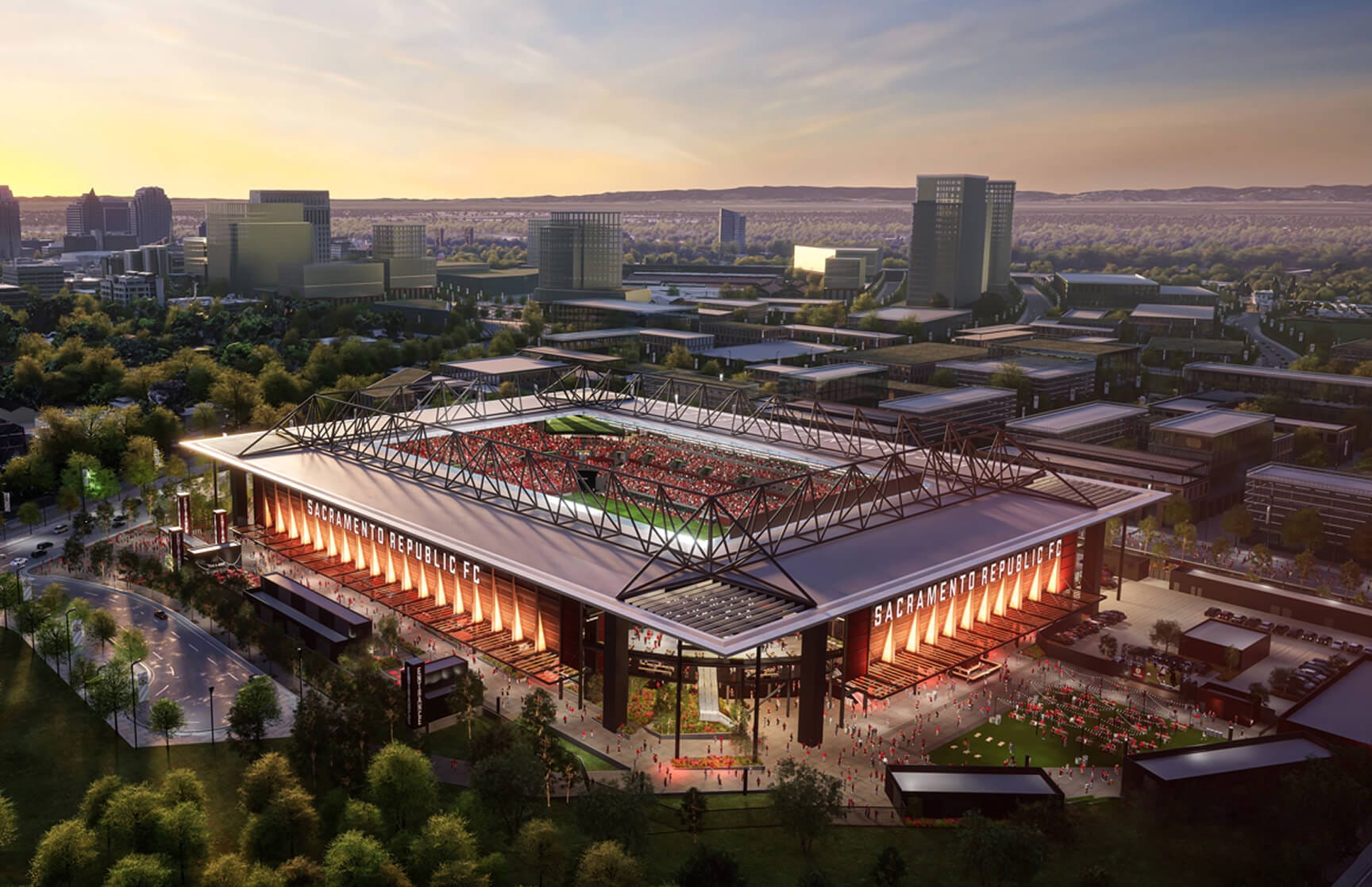
The stadium site, meanwhile, is still mostly horizontal. There is no seating bowl or structural frame yet. The July 28 aerials instead show a graded site with drilling rigs working near the center, excavators and trucks moving across the property and materials staged around the construction area. Republic FC said earlier this year that infrastructure work would precede stadium foundations and vertical construction later in 2026.
Republic FC began pursuing a Railyards stadium during Sacramento’s campaign for a Major League Soccer expansion franchise. MLS selected Sacramento for expansion in 2019, and plans at the time called for a larger stadium on the same property. That effort stalled in 2021 after lead investor Ron Burkle withdrew, putting both the MLS bid and stadium in doubt.
Wilton Rancheria’s investment in Republic FC revived the project. The tribe became the club’s majority owner in 2024, and Republic FC returned to the Railyards with a smaller stadium that did not depend on an MLS expansion award.
When the team broke ground in August 2025, the plan called for a 12,000-seat stadium costing about $175 million. Republic FC planned to add seats in later phases if demand justified an expansion. The club changed course this spring. In March, Republic FC and Wilton Rancheria announced that the stadium would be built with more than 20,000 seats from the start. The project budget has since grown to about $450 million, with the ownership group financing the stadium privately.
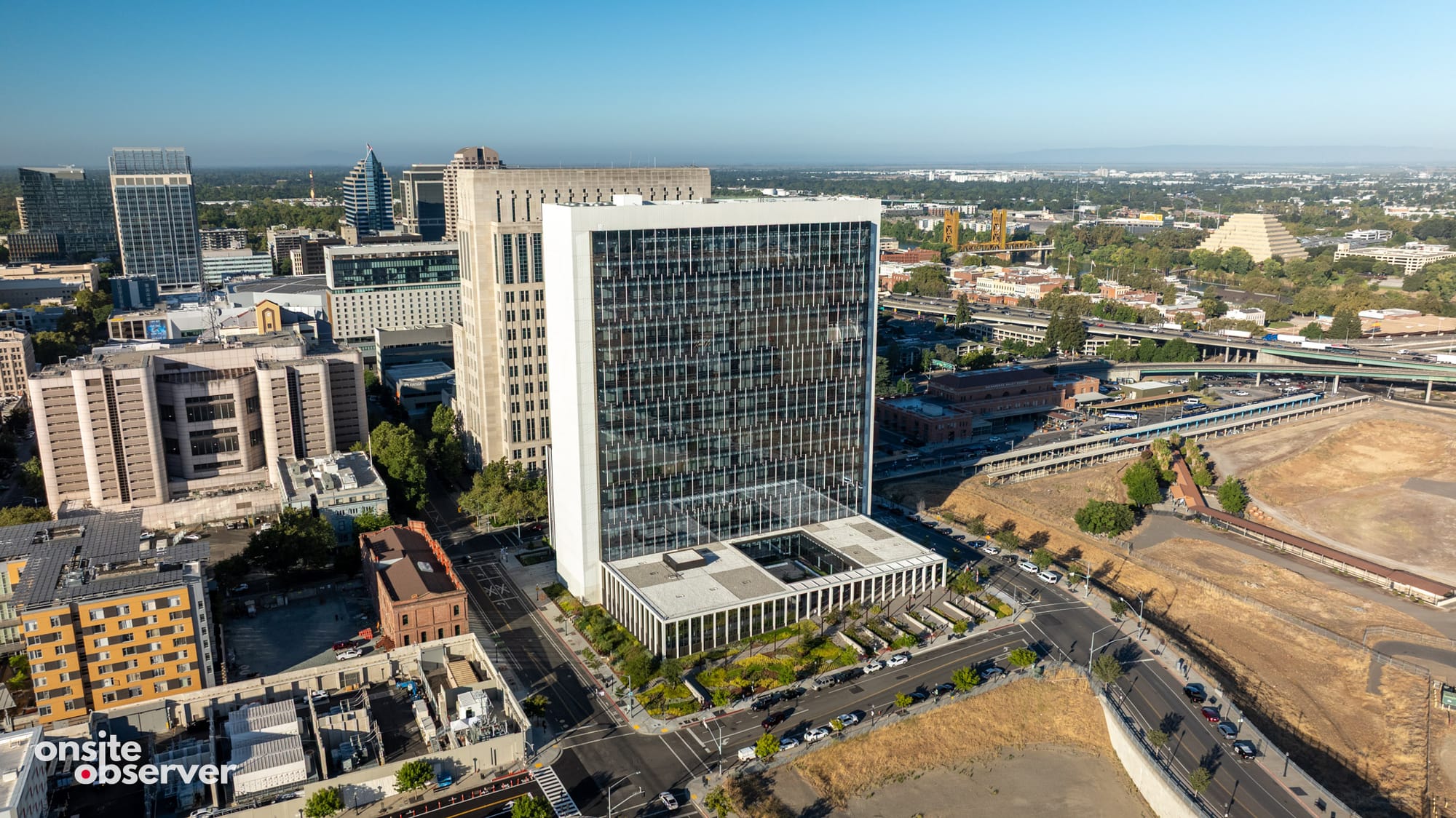
The Railyards’ newest completed project is the Tani G. Cantil-Sakauye Sacramento County Courthouse at 500 G St. It became fully operational in April after years of construction along the southern edge of the district. The 18-story courthouse includes 538,000 square feet and 53 courtrooms and now handles criminal and civil cases previously heard in older downtown buildings. Sacramento Superior Court puts the project cost at approximately $514 million.
Residential construction has been much more limited. The A.J. contains 345 apartments and the Wong Center added 150 affordable senior apartments, bringing the Railyards to 495 completed housing units, including 219 income-restricted homes.
That leaves at least 5,500 additional homes to reach even the low end of the 6,000-to-10,000-unit range approved by the city. The Railyards plan also allows between 2.8 million and 3.9 million square feet of office space, 514,270 square feet of retail, 771,405 square feet of flexible mixed-use development, 1,100 hotel rooms and 33 acres of open space.
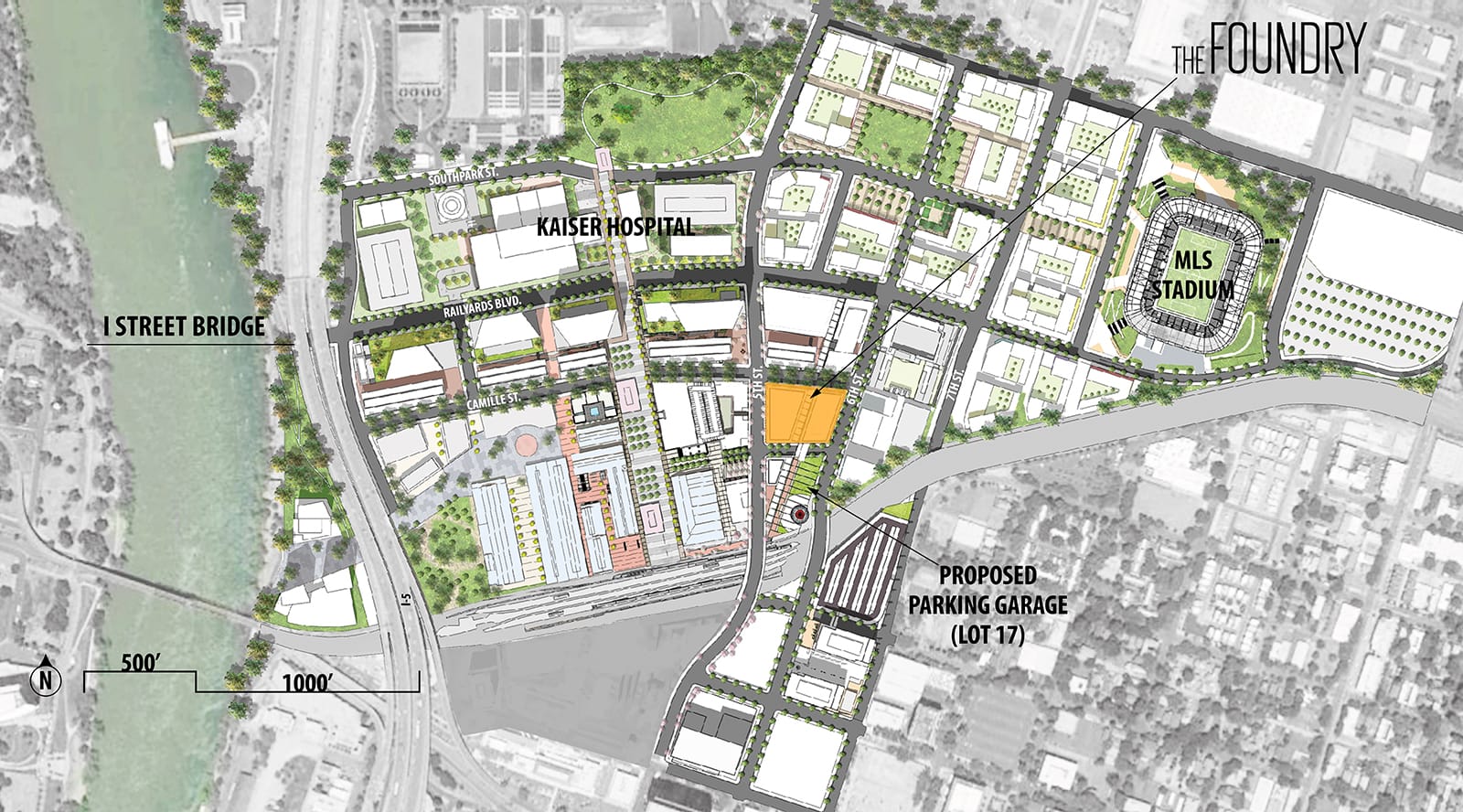
The July 28 aerials show no comparable wave of construction on most of those uses. Large parcels remain vacant throughout much of the 244-acre site. How quickly those parcels can be developed depends partly on infrastructure, an issue that returned to City Hall on the same day Onsite Observer photographed the site.
Sacramento had scheduled a July 28 hearing on a proposal to expand the Railyards Enhanced Infrastructure Financing District, a mechanism that uses growth in property-tax revenue within designated boundaries to help pay for roads, utilities and other public improvements. City officials postponed the hearing until August after identifying a problem with the filing.
The city tried to expand the district in 2025, but the proposal failed after more than half of eligible residents and landowners filed protests, requiring the Railyards Public Financing Authority to abandon the proceedings. Residents argued that the redevelopment plan did not provide enough affordable housing, citing plans that could result in only about 6% of the 10,000 homes envisioned at full buildout being affordable.
For the new proposal, the city redrew the boundaries to exclude the A.J. Apartments and Wong Center, the two residential developments where the protests began. Residents of those buildings therefore would not count toward the protest threshold for the proposed expansion.
By 2029, if current schedules hold, Sacramento could have a 3,700-person concert venue, 20,000-seat stadium and 310-bed hospital operating within a few blocks of Sacramento Valley Station. Those projects would give the Railyards something it has lacked for much of the past 20 years: a destination capable of bringing people into the district throughout the day, at night and on weekends.
Author

Vitaliy Moskalenko is a development reporter passionate about documenting how communities grow. Through Onsite Observer, he delivers site visits, drone footage, and research-driven stories that bring transparency and context to local development.