Sacramento County prepares to seek bids on first segment of Hazel Avenue interchange rebuild
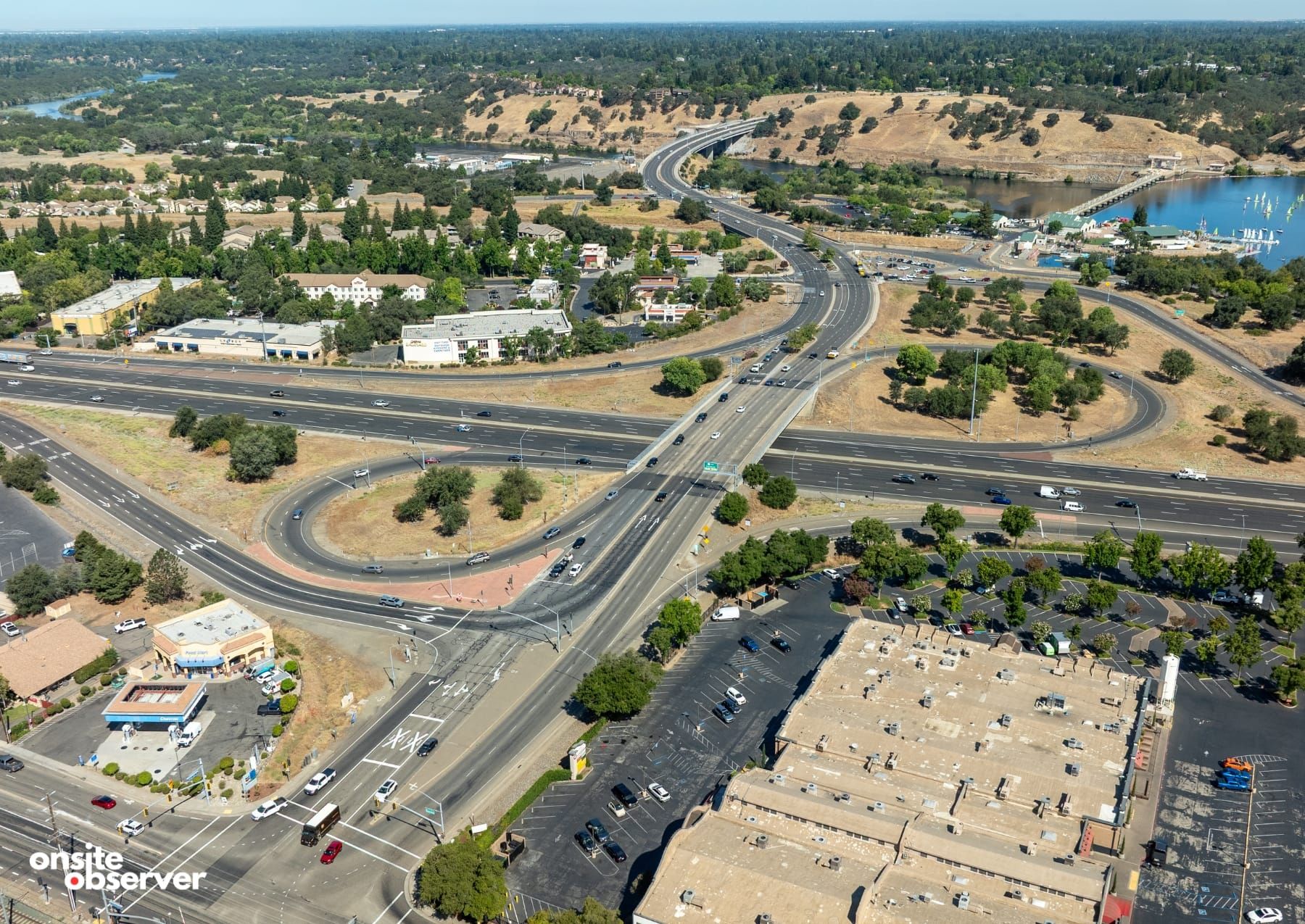
Sacramento County is preparing to seek bids for the first segment of a long-planned reconstruction of the Hazel Avenue interchange at U.S. 50, beginning with bridge, ramp and freeway work expected to start in spring 2027.
The county estimates the first segment will cost $27.4 million to build, according to a staff report prepared for the Board of Supervisors' July 14 meeting. Supervisors were asked to approve the plans, advertise the project and receive bids Aug. 13, or later if the county transportation director changes the date through an addendum. The contract amount will be determined after the county opens and reviews the bids.
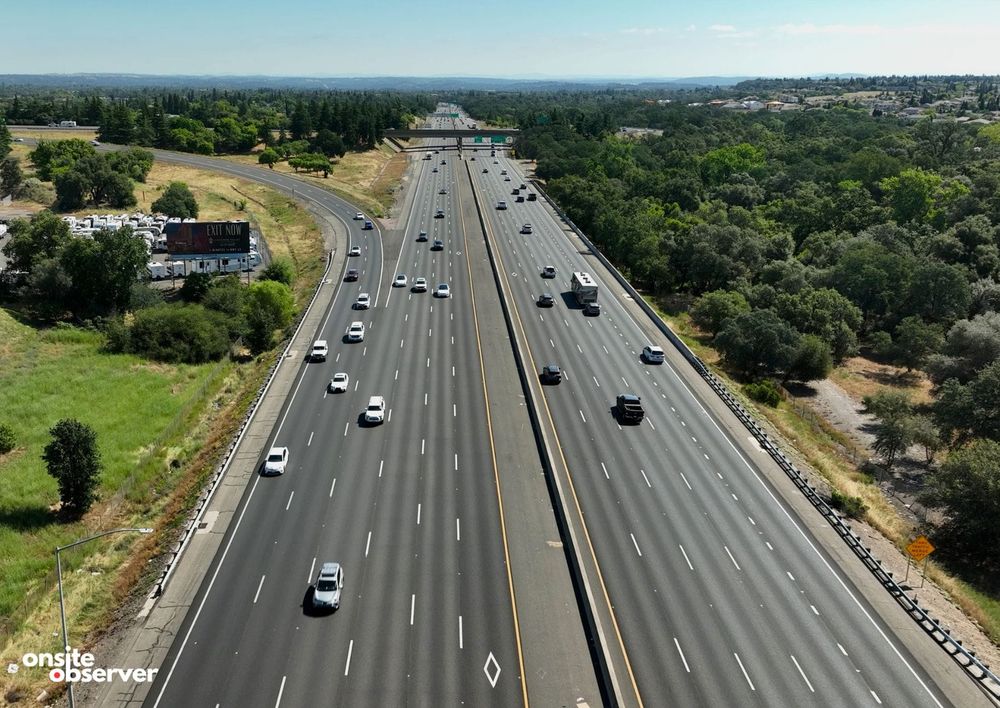
The work would widen the Hazel Avenue overcrossing of U.S. 50, modify the westbound entrance and exit ramps to incorporate a shared-use path, build a retaining wall at the eastbound loop entrance ramp to widen the shoulder, and widen U.S. 50 between Alder Pond and Folsom Boulevard to add an eastbound auxiliary lane. Construction is expected to finish in fall 2028.
Video of Hazel Ave/US 50 Interchange, taken July 21, 2026.
The auxiliary lane would give drivers entering eastbound U.S. 50 near Hazel Avenue a continuous lane to the Folsom Boulevard exit, reducing the need to merge into through traffic and then move back toward an exit a short distance later.
The work is only the first part of a much larger overhaul now estimated at $161 million, according to a California Transportation Commission agenda item published in November.
The full project would carry Hazel Avenue over Folsom Boulevard and the adjacent light-rail and freight tracks, eliminating the existing street-level intersection. Hazel Avenue would then extend south to Atlanta Street, a future road tied to the Easton Place development.
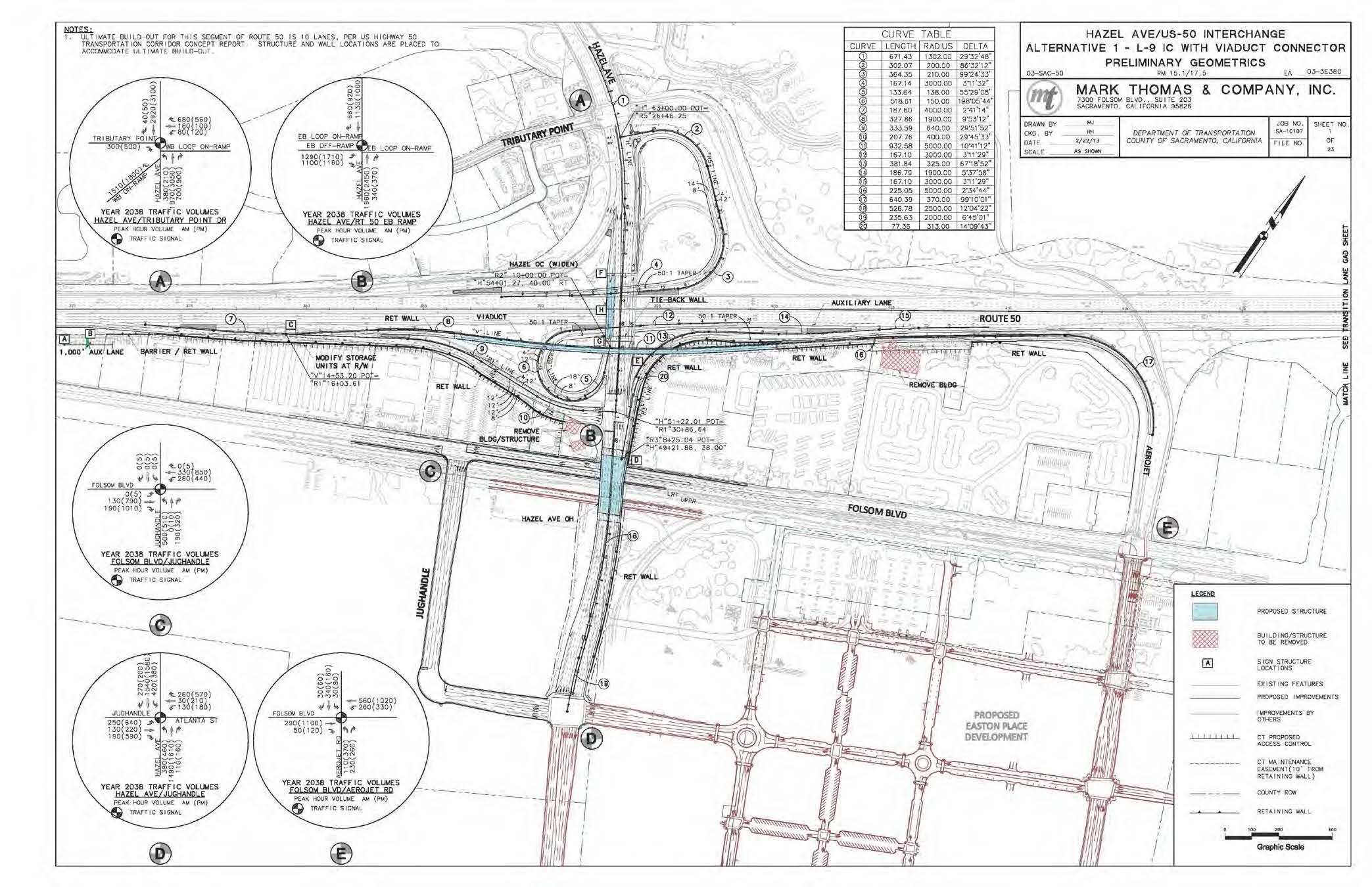
The project also would change how drivers reach Aerojet Road from eastbound U.S. 50. The existing Aerojet Road exit, east of Hazel Avenue, would be removed as a separate freeway exit and combined with the Hazel Avenue off-ramp, with the exit point shifted roughly 830 feet east to give drivers more room to react before the ramp splits.
Drivers would leave U.S. 50 at Hazel Avenue before the ramp divides. One branch would serve Hazel Avenue, while the other would rise onto a viaduct, cross above Hazel Avenue and continue toward Aerojet Road and Folsom Boulevard.
The broader project also calls for reconstructing the westbound loop entrance, the eastbound exit and both eastbound entrance ramps.
The project has been split into two construction segments. The county received $15 million in state Local Partnership Program funding for construction in June 2023, and the California Transportation Commission subsequently approved dividing the work to better manage its scale and complexity and to meet the program's delivery requirements.
The second segment will move forward under a separate contract after the remaining right-of-way acquisitions are completed. County budget documents include a $5.6 million appropriation for the second segment in the 2026-27 fiscal year, but do not give a construction date or a total cost estimate for that portion of the work. The first segment carries a $10.2 million appropriation for the same year, with the staff report noting that more funding will be requested in future budgets because the project spans several years.
The Board of Supervisors certified the project's final environmental impact report and environmental assessment on Sept. 22, 2020, selected the alternative now being built and directed staff to complete design work and acquire the necessary right of way. Because nighttime construction lighting was found to be a significant impact that could not be fully mitigated, supervisors also adopted a statement of overriding considerations — a finding that the project's benefits outweigh that harm. Eliminating night work, the county said, would lengthen construction and worsen daytime traffic delays.
The environmental document identifies 17 affected parcels. The county's 2020 staff report said the Chevron station and Cattlemen's restaurant properties are shown as full acquisitions because the project would affect their buildings, though it noted an owner could ask to retain the leftover land during the acquisition phase. The environmental document also anticipates acquisition and building impacts at a Sentry Storage facility.
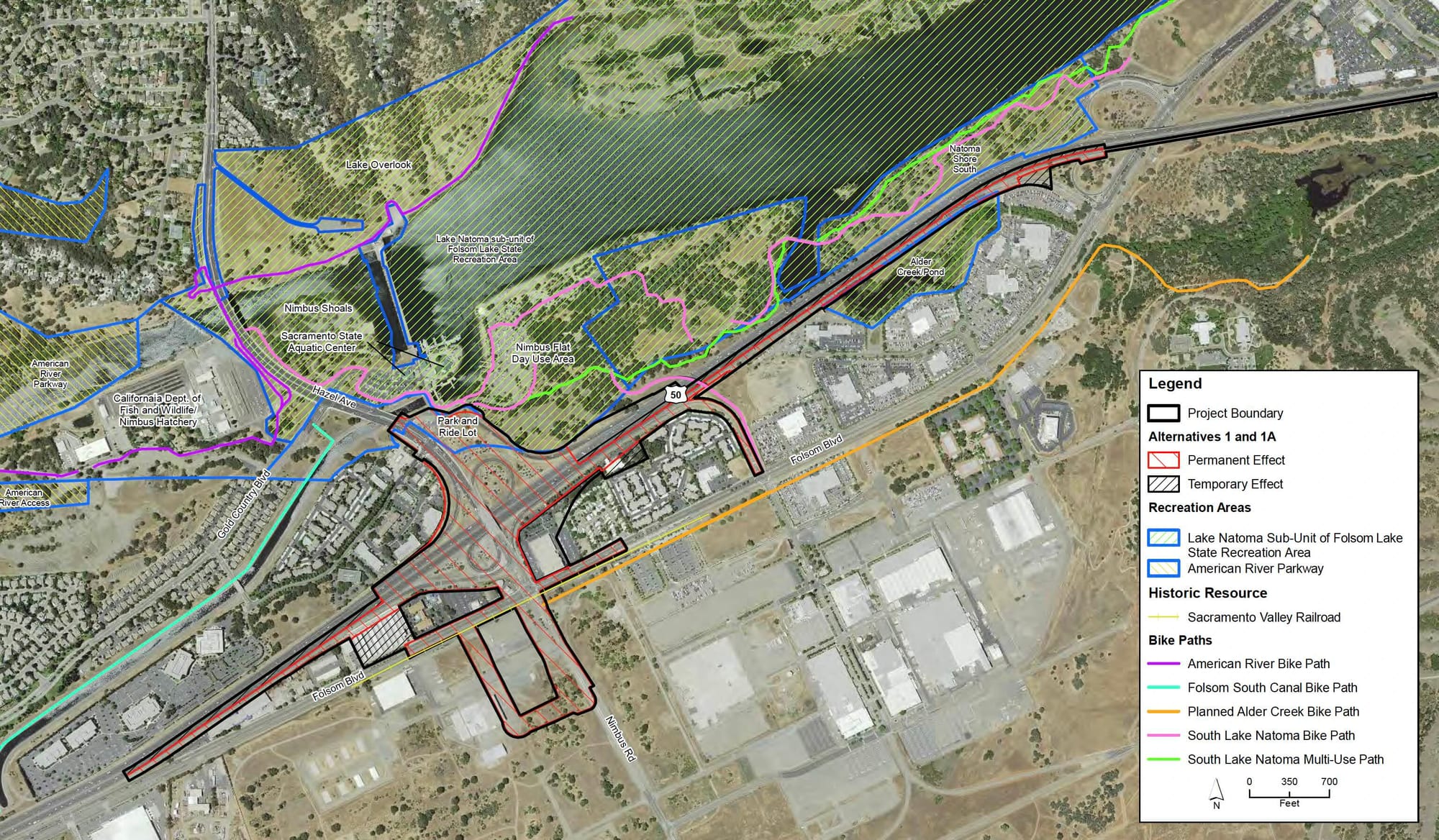
Nimbus Winery would remain. The viaduct would permanently cross above the northern portion of the winery's parking lot on an aerial easement, and the county expects to use that area to stage construction. The lot would be rebuilt and available for parking beneath the structure once the work is finished.
Rudy's Hideaway also would remain, with the county acquiring only a small easement; its western driveway would become the fourth side of a new signalized intersection.
The interchange's current layout has long been a concern for transportation planners. The eastbound freeway ramps meet Hazel Avenue about 200 feet from Folsom Boulevard, leaving little room for vehicles to line up between traffic signals. Among the project's stated objectives are removing that close spacing and minimizing conflicts with the adjacent light-rail and freight tracks.
The project would add capacity for traffic expected from new development south of U.S. 50. Sacramento County supervisors approved Easton Place and Glenborough in January 2009 on about 6,699 acres of Aerojet-owned land. The approvals required the developer to help fund the interchange reconstruction consistent with the project's financing plan.
County staff estimated the entire interchange project at $94 million in 2020, including design, property acquisition and construction. The $161 million figure the transportation commission listed in November is the first publicly available update. Neither agency has published an explanation for the increase.
Keep following
Watch this story as an Onsite Brief.
 Onsite Brief ·
Big changes are planned for the Hazel Avenue interchange at Highway 50.
Watch the video →
Onsite Brief ·
Big changes are planned for the Hazel Avenue interchange at Highway 50.
Watch the video →
Want our stories first on Google? Add Onsite Observer as a preferred source.
Add us on Google →
Comments
What’s your take? Share your thoughts with other readers.