Sacramento council backs plan to put up to $825 million in property tax revenue toward the Railyards
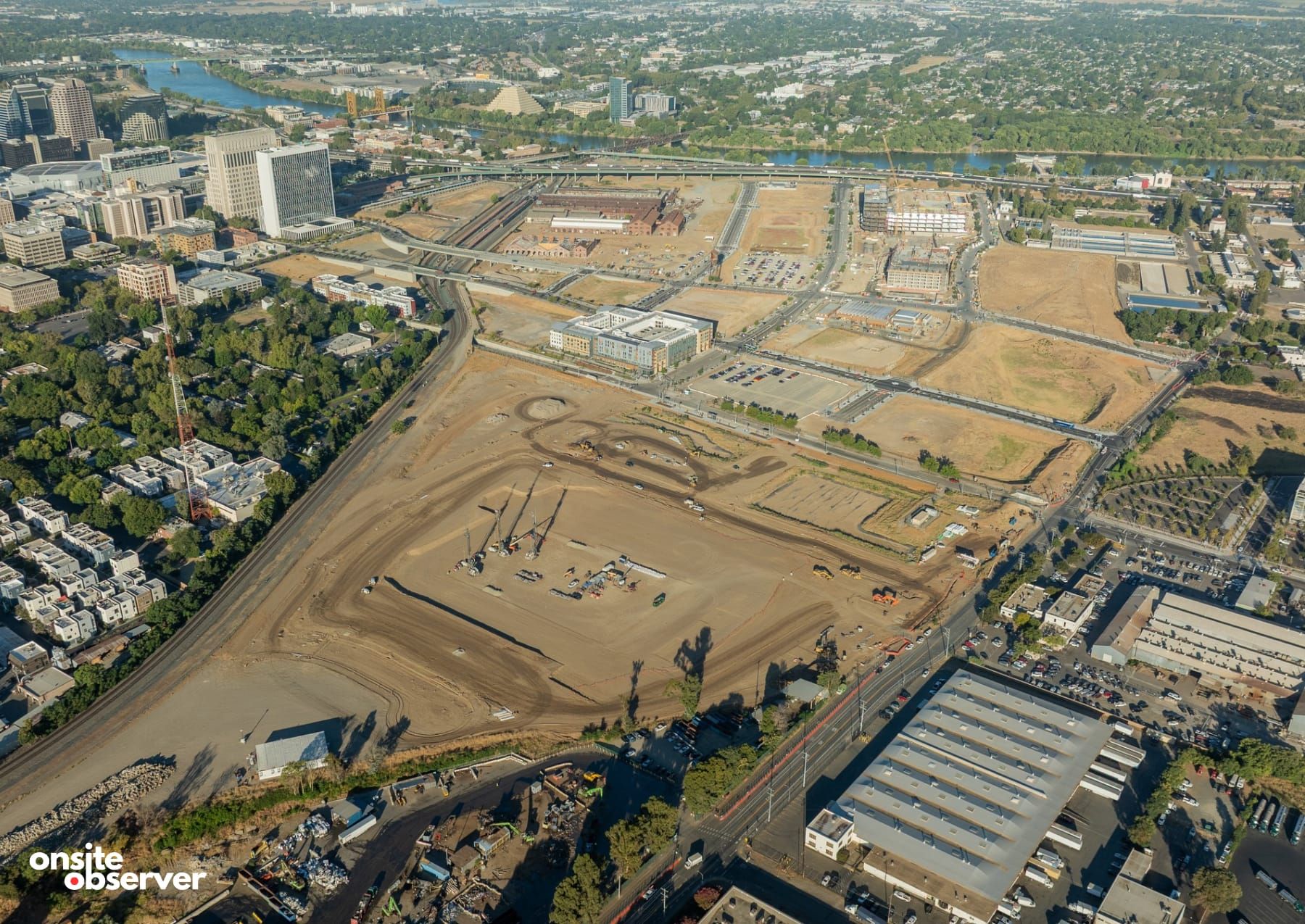
Southern Pacific crews were still working in Sacramento’s locomotive shops when the city approved a redevelopment plan for the Railyards in 1994. More than three decades later, fewer than 500 housing units have been built on the 244 acres north of downtown. The city’s 2016 plan allows up to 10,000 housing units.
Karina Talamantes, now the vice mayor, was about 5 when the 1994 plan passed. Lisa Kaplan had started college the year before. On Tuesday, they joined six colleagues in voting for a financing deal that could accelerate redevelopment.
In the years between, the city revised its plans numerous times as the property changed hands. Thomas Enterprises, a previous owner, lost most of the site to foreclosure in 2010, after the Great Recession. The site also required extensive remediation, including treating contaminated groundwater and hauling away about 800,000 tons of soil.
It wasn’t until the summer of 2020 that crews broke ground on the Railyards’ first residential project, the 345-unit A.J. apartment complex. Since then, Kaiser Permanente’s 310-bed hospital has risen on the west side of the property, where crews set the final steel beam in September. Just south of the hospital, crews are converting the former Paint Shop at the historic Central Shops into a concert venue. And farther east, Sacramento Republic FC is building a new soccer stadium, where the city approved a preliminary agreement with the club for a Major League Soccer venue in 2015. Republic FC expects to open the stadium in 2028.
Video of the Railyards captured July 28, 2026.
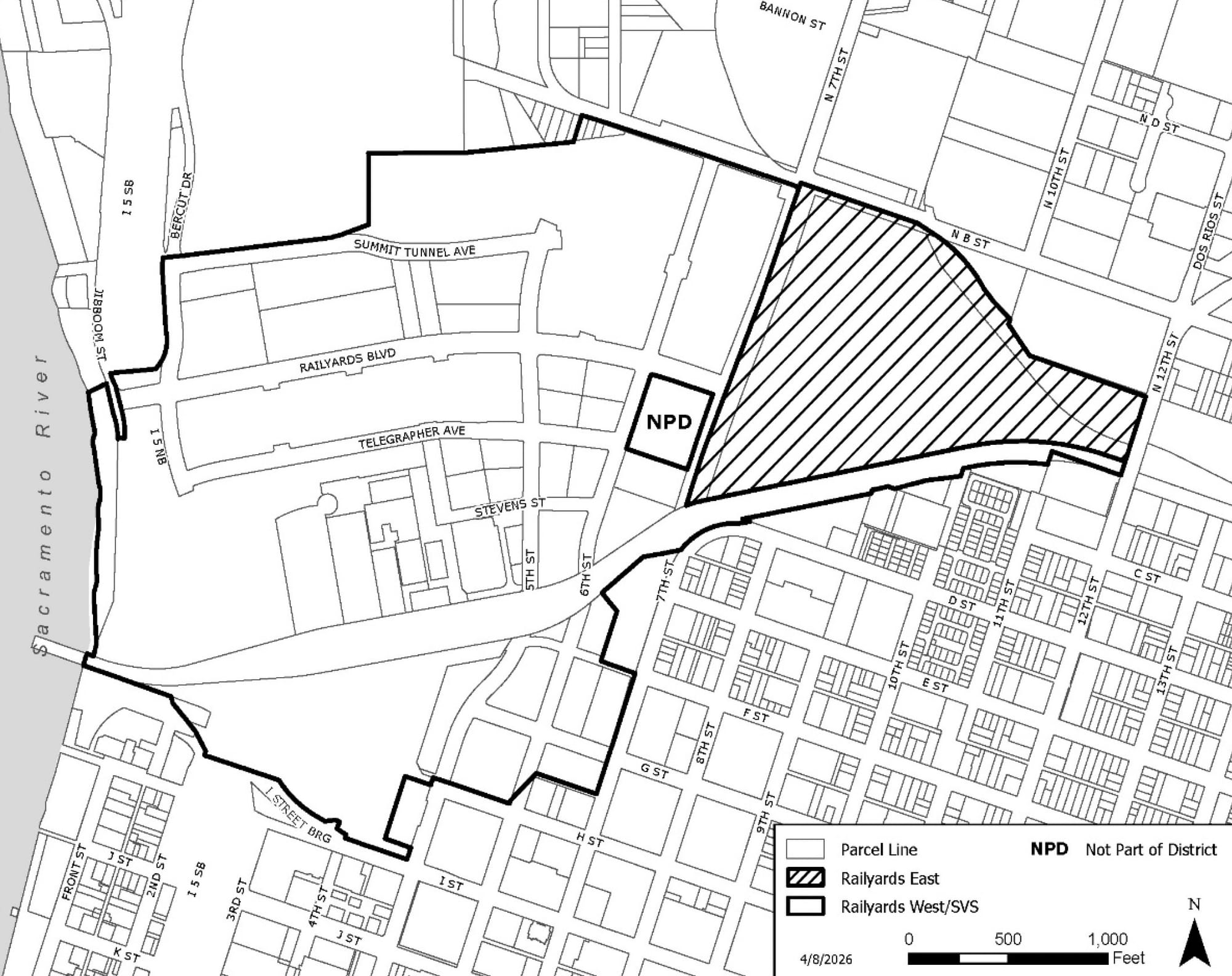
The stadium site is where the city started with its financing plan. In 2019, Sacramento created a 42-acre district around it to help pay for streets and utilities. On Tuesday, the council voted 8-0 to approve the proposed expansion to 238 acres.
The city agreed to set aside its share of any increase in property tax revenue within the district to help pay for streets, sewers and other public improvements. The expansion would cover nearly the entire Railyards, where the city says more than $200 million in public improvements are still needed to prepare the land for development. The city projects the expanded district would bring in about $825 million over 50 years, through June 2077.
Two weeks after the City Council approved an earlier expansion in June 2025, residents of the A.J. and the Wong Center came to a public hearing to oppose it. With help from the hospitality workers union Unite Here Local 49, they pressed the city to require more affordable housing in the Railyards. Lead developer Denton Kelley had said about 8% of the first 6,000 homes would be affordable. By July, residents and the union were calling for 25% of new homes in the Railyards to be affordable, The Sacramento Bee reported.
City staff confirmed that more than half of the eligible residents and property owners within the proposed district had formally objected. That was enough under state law to stop the expansion. On July 22, the Railyards Public Financing Authority, the board that oversees the district, dropped the plan.
The map the council approved Tuesday leaves both apartment complexes outside the proposed district. Only protests from residents and property owners within the new boundaries count toward the majority needed to stop the expansion.
Nancy Williams, who lives in an affordable apartment at the A.J., asked the council Tuesday to put off the vote until the city could secure more affordable housing, a grocery store and a fund to help tenants stay in their homes. She wanted more families to be able to afford to live in the Railyards and for the neighborhood to be “not just a place to visit but a place to live.”
Wilton Rancheria, Republic FC’s majority owner, had broken ground on the stadium weeks after last year’s expansion failed. It has since increased the planned capacity from 12,000 seats to more than 20,000. “We kept our promise to Sacramento and now we’re asking you to keep yours,” tribal Chairman Jesus Tarango told the council.
Under the funding agreement the council approved Tuesday, the district would first pay back the developers and the city for costs they cover up front. The stadium developer, Indomitable Ventures LLC, would get about $45 million for roads, utilities and other work around the stadium. The Railyards’ lead developer, Downtown Railyard Venture LLC, could get up to $50 million for public improvements, including work at the Central Shops. The city would get $14 million, mostly for land near Sacramento Valley Station.
Once the city and developers are paid back, 25% of the district’s remaining tax revenue would go toward affordable housing in the Railyards or elsewhere in Sacramento. The city projects $2.4 million for housing in the fiscal year that starts in July 2042 and $179.7 million in all by 2077. The remaining 75%, about $539 million, could pay for parks, improvements at Sacramento Valley Station and other public work.
Council members sought additional commitments before voting, but the discussion stopped short of specific requirements. When Councilman Eric Guerra asked the development partners to work on a local hiring plan, Kelley said most jobs on the Paint Shop and plaza project were already local. He was not prepared to agree to hiring standards during the hearing. Tarango agreed to sit down with the city. “That’s an easy yes,” he said. “That’s a commitment to say we’re open to listening.”
Councilman Roger Dickinson supported efforts to obtain more affordable housing and local hiring, while declining to make those provisions conditions of an agreement already negotiated. He also urged officials to look for ways to make housing funding available sooner.
Mayor Kevin McCarty’s approval motion directed staff to work with the landowners and development partners on additional local investment and partnerships. Talamantes insisted on a deadline for staff to update the council on those discussions. Staff agreed to report back by the end of January, and the council confirmed its unanimous approval.
The expansion still needs approval from the Railyards Public Financing Authority, which is scheduled to consider the plan at a public hearing at 9:30 a.m. Dec. 1 at City Hall.
Project Watch
Keep following: Railyards
Every story on this project, newest first.
- Inside the latest construction progress at Sacramento Railyards
- Vertical construction is now underway on Kaiser’s new Railyards hospitalPremium
- The rare moment Sacramento gets to redesign itself—and it’s happening now.
Want our stories first on Google? Add Onsite Observer as a preferred source.
Add us on Google →
Comments
What’s your take? Share your thoughts with other readers.