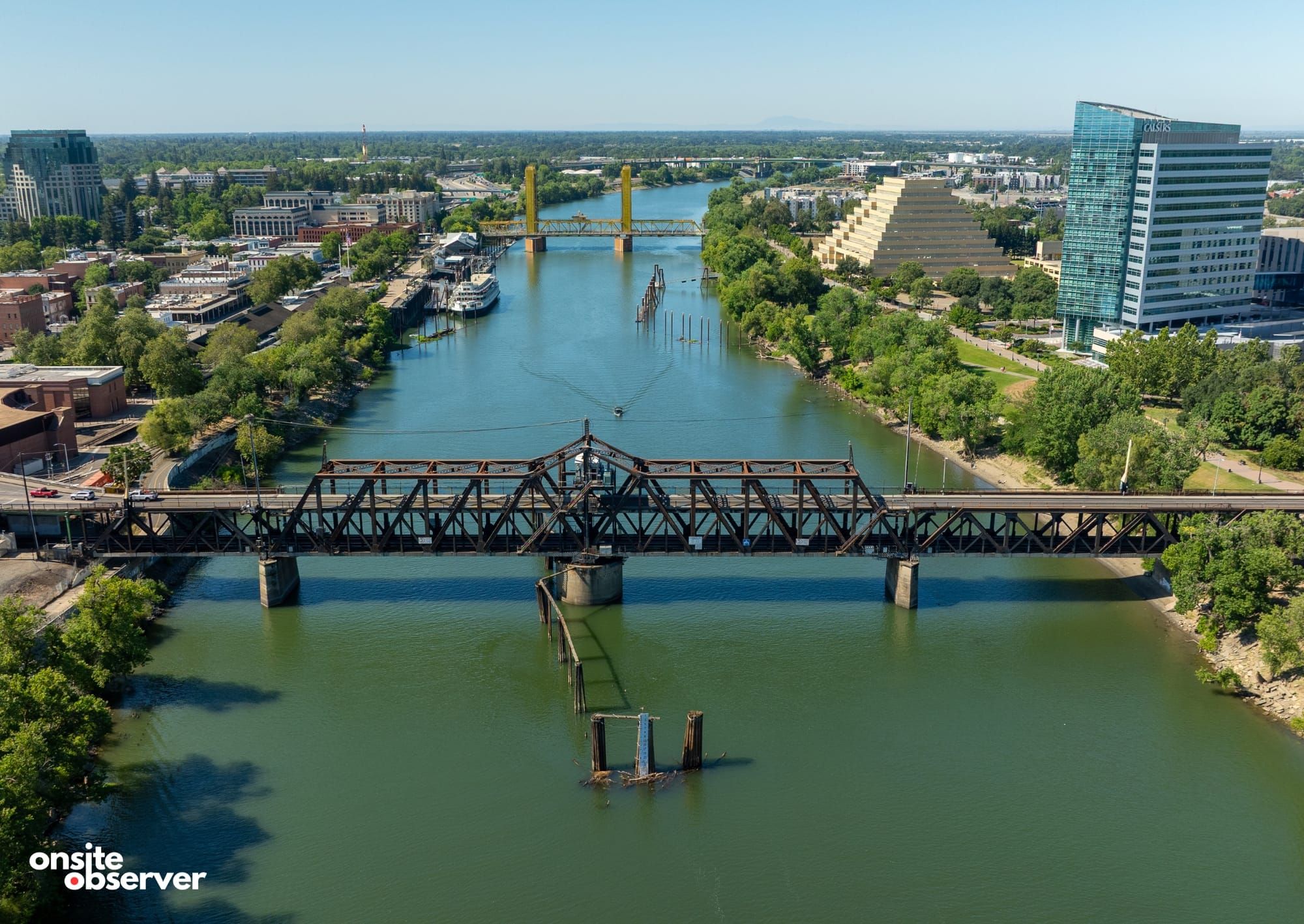
A proposed five-year federal transportation bill advancing in Congress could offer Sacramento’s stalled I Street Bridge replacement project a funding lifeline after bids for the long-planned river crossing came in nearly $100 million over budget.
The BUILD America 250 Act, a five-year federal transportation bill released by the House Transportation and Infrastructure Committee, would authorize about $580 billion for highways, bridges, transit, rail, and safety programs through fiscal 2031. It would succeed the Infrastructure Investment and Jobs Act, also known as the Bipartisan Infrastructure Law, which expires Sept. 30, 2026.
For the Sacramento region, one of the most important parts of the bill may be a proposed bridge completion program that would provide federal funding for large bridge projects ready for construction but still facing funding gaps.
The proposal would direct roughly $9 billion a year to states through a federal bridge formula program, which helps pay for bridge repair and replacement projects. It would also create a new Bridge Completion Program authorized at $2 billion a year. The program would award competitive grants to large, high-cost bridge projects on the National Highway System. Unlike the formula money, which is distributed to states under a set formula, funding for the Bridge Completion Program would still require annual approval from Congress through the appropriations process.
Derek Minnema, a civil engineer and president of the Transportation Officials Division of the American Road & Transportation Builders Association, said the measure could help address the project’s funding gap after the latest setback.
“The bill essentially is a major reauthorization for bridges,” Minnema said in an interview. “It will put $9 billion a year into bridges in the United States. And there’s an additional $2 billion that is discretionary and can be appropriated by Congress. So, total, you could look at $11 billion a year.”
The existing I Street Bridge, built in 1911, still carries vehicles over the Sacramento River between Sacramento and West Sacramento, while its lower deck continues to serve rail traffic. But the upper deck was built for another era. Its lanes are about 9 feet wide, too narrow to serve buses safely, and the bridge lacks dedicated bike lanes. The sidewalks also do not meet modern accessibility standards.
Video of the I Street Bridge, captured May 22, 2026.
“This is exactly the type of bridge that needs to be replaced,” Minnema said. “It is 100 years old. It is not functional for today’s needs. There’s no question about it. This absolutely needs to be upgraded to modern day.”
The replacement project would build a new movable bridge upstream of the existing crossing, linking Sacramento’s Railyards district with West Sacramento’s Washington neighborhood. The new span is planned to serve vehicles, transit, bicyclists, and pedestrians, with wider travel lanes and 12-foot shared-use paths. The existing bridge would remain for rail service on the lower deck, while the upper deck is being studied for a future bicycle and pedestrian crossing.
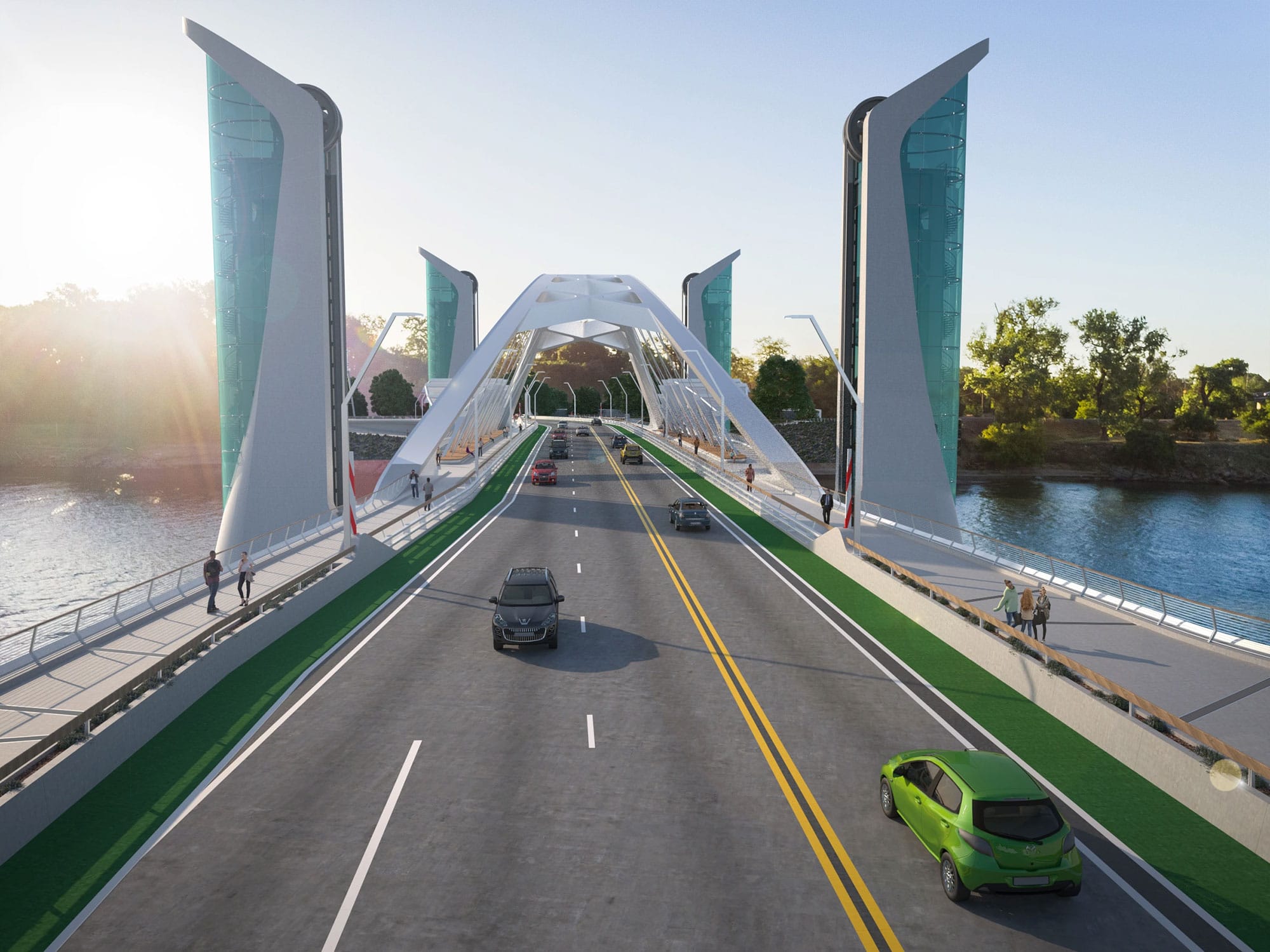
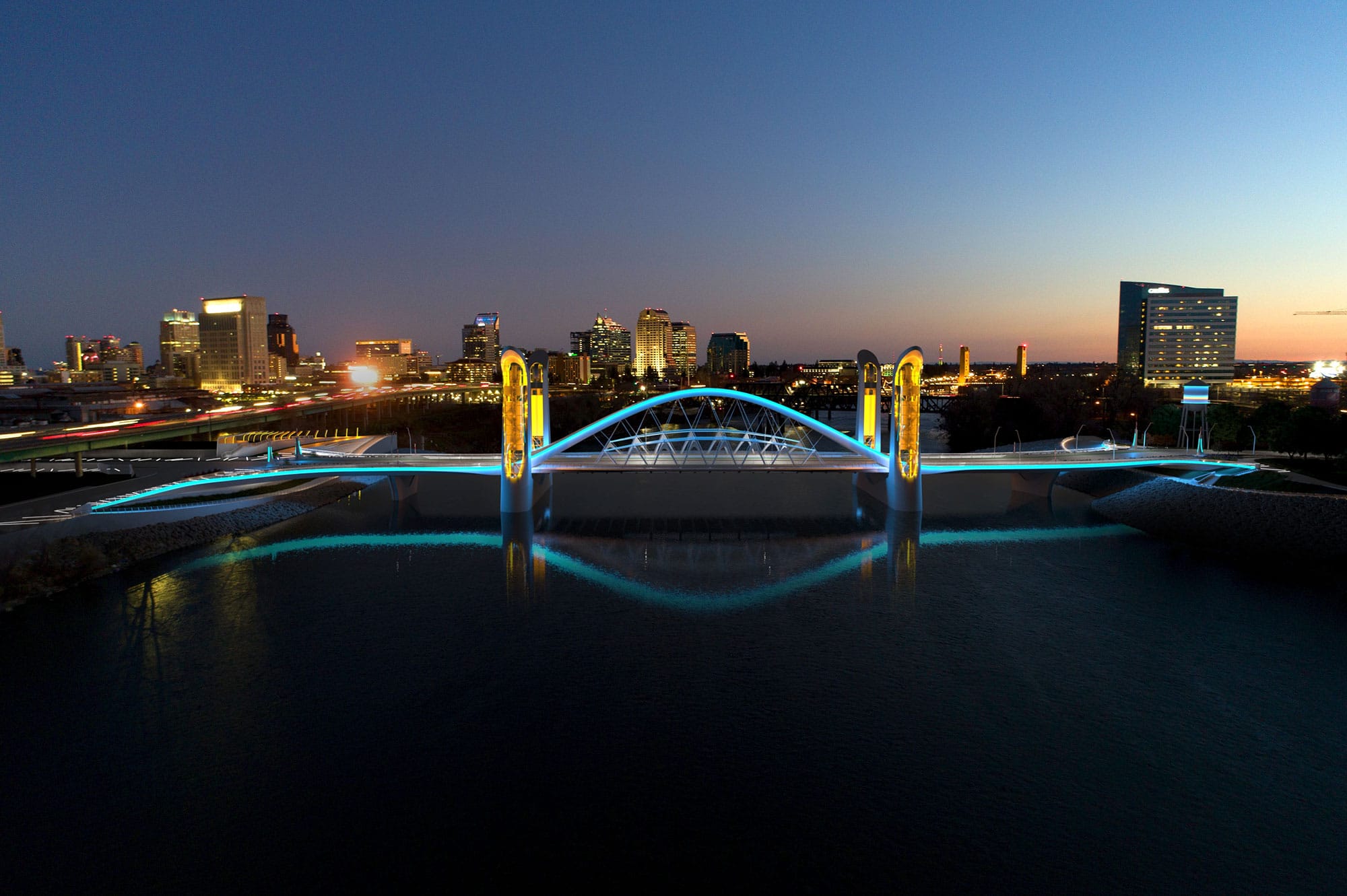
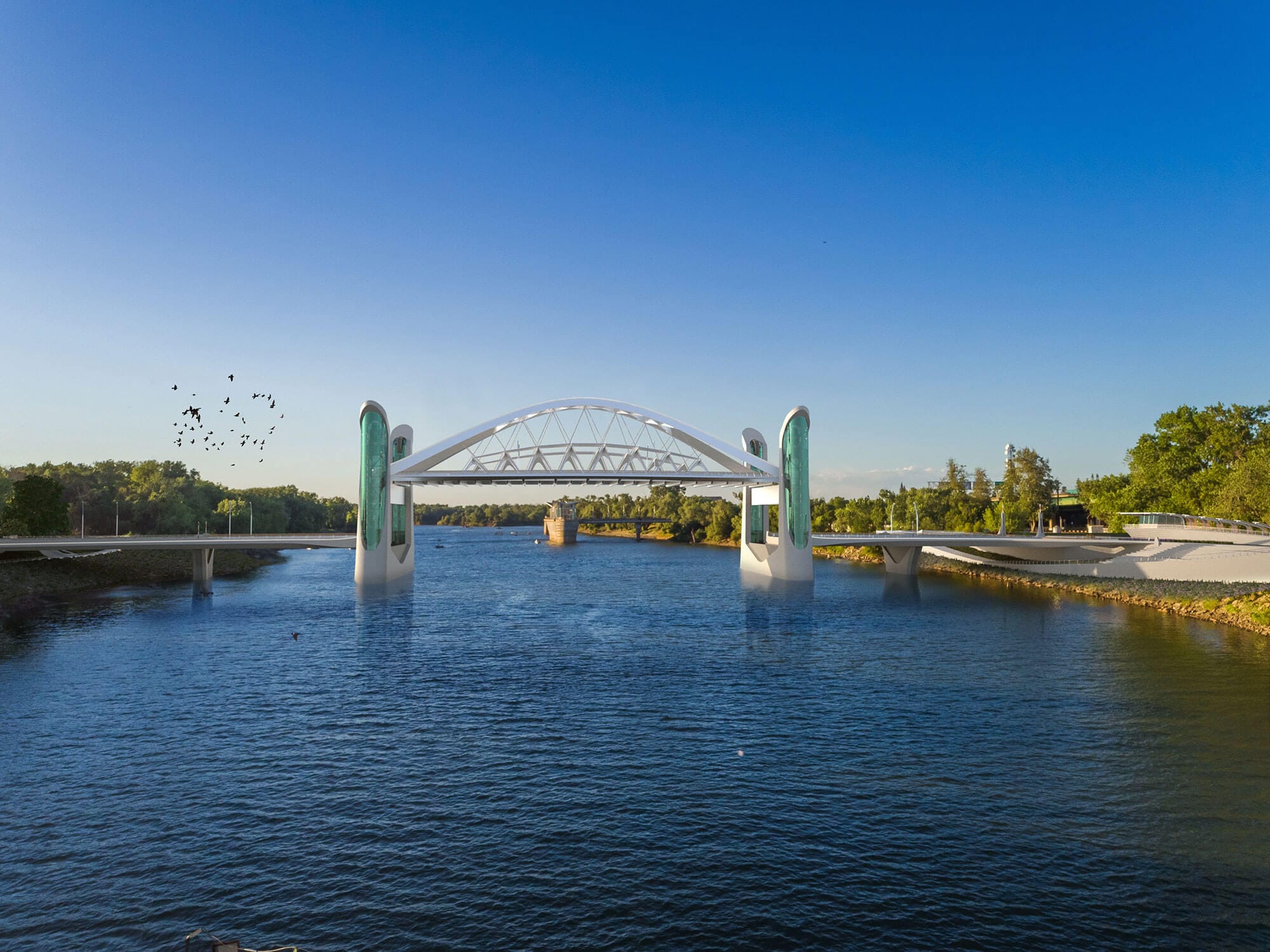
Renderings show the proposed I Street Bridge replacement as a modern lift bridge over the Sacramento River. Image: City of Sacramento.
Until recently, the project appeared close to construction. Sacramento officials had estimated construction of the new bridge at about $300 million. But when bids were opened in April, the city received three proposals ranging from about $398 million to $517 million. That forced city officials to reassess costs and next steps. Construction is no longer expected to begin this summer, and a potential start date has been pushed into 2027.
Minnema said the size and spread of the bids showed more than routine inflation.
“Costs have gone up on everything, especially post-COVID,” he said. “A lot of that’s driven by supply chain challenges. A lot of it’s driven by inflation. Especially in road building, everything is tied to oil, diesel fuel, and those hard commodities.”
But he also pointed to the project's design and complexity.
“The I Street Bridge is a complicated movable structure,” Minnema said. “They designed a very expensive, very complicated bridge.”
He said the large gap between the bids should prompt another look at the project’s engineering, design assumptions, and potential cost-saving measures.
“When you have a big spread of bids, that means the contractors have a very different perspective as to the complication of what they’re building,” Minnema said. “To have a big spread in cost, to me, is a signal to maybe spend some time to reevaluate the engineering, the type selection, and see what really happened there.”
The BUILD America 250 Act would not guarantee money for the I Street Bridge. The bill still needs approval from the House and Senate and must be signed by the president. Even then, the new Bridge Completion Program would have to be funded through the annual appropriations process.
Minnema said he is optimistic and that the bill appears tailored to the kind of problem Sacramento now faces.
“It may take a couple of years for that funding to come down, to get signed and for California to allocate those funds... a project like the I Street Bridge is absolutely positioned to benefit,” he said. “This bill is a step in the right direction.”
Support our work and unlock all articles, project updates, and subscriber-only insights by subscribing to Onsite Observer.
Project Watch
Keep following: I Street Bridge
Every story on this project, newest first.
See the full timeline →Want our stories first on Google? Add Onsite Observer as a preferred source.
Add us on Google →

Comments
What’s your take? Share your thoughts with other readers.