Five years after losing their homes, Caldor Fire survivors could see relief extended
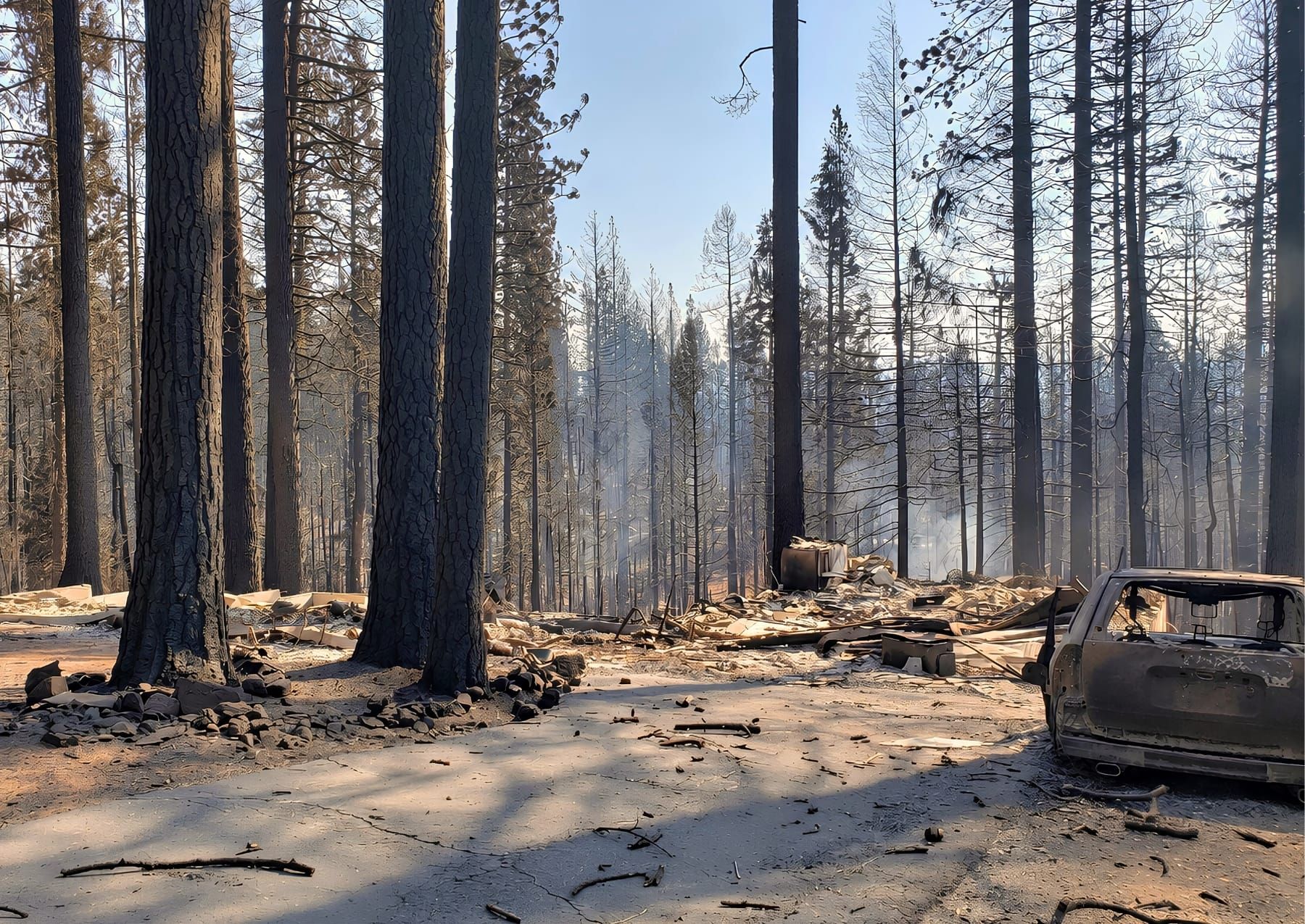
Five years after the Caldor Fire destroyed nearly 800 homes, El Dorado County planning commissioners have endorsed extending temporary housing and rebuilding relief for nearly three more years as residents continue to struggle to secure permanent homes.
The Caldor Fire began Aug. 14, 2021, south of Grizzly Flats, a rural community in the Sierra Nevada foothills east of Sacramento. It burned nearly 222,000 acres, spreading into the Lake Tahoe Basin and threatening South Lake Tahoe. More than 50,000 people were forced to evacuate during the fire, according to the U.S. Forest Service.
The Planning Commission voted 4-0 on Sept. 10 to recommend extending the county’s Caldor Fire Resiliency and Rebuilding Ordinance from Dec. 31, 2026, to Oct. 1, 2029. The rules allow eligible residents to remain on their properties in permitted recreational vehicles while rebuilding and provide permit fee relief.
The proposal still requires approval from the Board of Supervisors. A board hearing is scheduled for Oct. 20, Tom Meyer, a program manager with the county’s Planning and Building Department, told commissioners.

Stay ahead of what’s being built with unlimited access to local project updates, in-depth reporting and subscriber-only insights.
It was the first time the ordinance, or any amendment to it, had come before the Planning Commission, Meyer said. The original ordinance and its first two amendments were adopted as urgency ordinances. A third amendment, approved in 2024, went through an introduction and a second reading before the Board of Supervisors. With the state and local emergency declarations no longer in effect, staff said the proposed extension must follow the standard zoning ordinance amendment process.
Grizzly Flats lost 476 homes, according to a 2024 county staff report. The county’s proposed ordinance identifies Grizzly Flats as the community most affected by the fire and puts the countywide loss at 782 single-family residences. Officials say residents who were uninsured or underinsured continue to face difficulties rebuilding.
“The overall rebuilding process is taking longer than originally anticipated,” Meyer said during the meeting.
The county has received 75 applications for temporary RV permits under its Caldor fee waiver program, with 56 permits remaining active or issued, according to the staff report. Approximately half of those active permits are associated with properties where replacement homes are undergoing plan review, under construction or nearing the close of the permitting process.
The remaining permits are tied to properties where rebuilding plans have not begun or have not been determined, the report says. Meyer said staff would reconcile the permit count and close out any permits no longer needed.
Meyer said the extension would help residents preparing to begin construction, those who have yet to submit plans and those who need more time to determine their long-term housing arrangements. It would also give staff additional time to work with residents on available assistance.
The proposed October expiration date would better align with the construction season and avoid having the ordinance expire in the middle of winter, he said. The amendment would change only the expiration date, preserving the ordinance’s existing provisions.
The proposed ordinance also includes a finding that the extension is exempt from the California Environmental Quality Act under emergency-related provisions and a common-sense exemption.
Supervisors adopted the recovery ordinance on Sept. 10, 2021, five years to the day before the commission’s vote, to provide emergency housing options and support reconstruction. They expanded eligibility for permit fee waivers in 2022 to reduce rebuilding costs for insured and uninsured property owners.
The county has also used general fund money to cover state-mandated permit fees that cannot be waived and approved refunds for residents who initially qualified for only partial fee relief or none at all, according to the staff report.
In 2024, supervisors established a separate program under Title 25 to support the construction of owner-built rural homes for eligible residents in the Grizzly Flats area. Planning and Building Director Karen Garner told commissioners that financial assistance is available to participants who meet the income requirements for that assistance.
During the presentation, Meyer also said fewer than 10 temporary RV permits may have been issued in error. Staff are investigating and could seek the Board of Supervisors’ direction on revoking permits if appropriate, he said.
Staff plan to continue monitoring active permits, closing those no longer needed and helping residents identify long-term housing options. If supervisors approve the extension, the recovery ordinance would remain in effect until October 2029, more than eight years after the fire began.
Author

Vitaliy Moskalenko is a development reporter passionate about documenting how communities grow. Through Onsite Observer, he delivers site visits, drone footage, and research-driven stories that bring transparency and context to local development.