UC Davis Health’s California Tower project continues to rise on the Sacramento campus

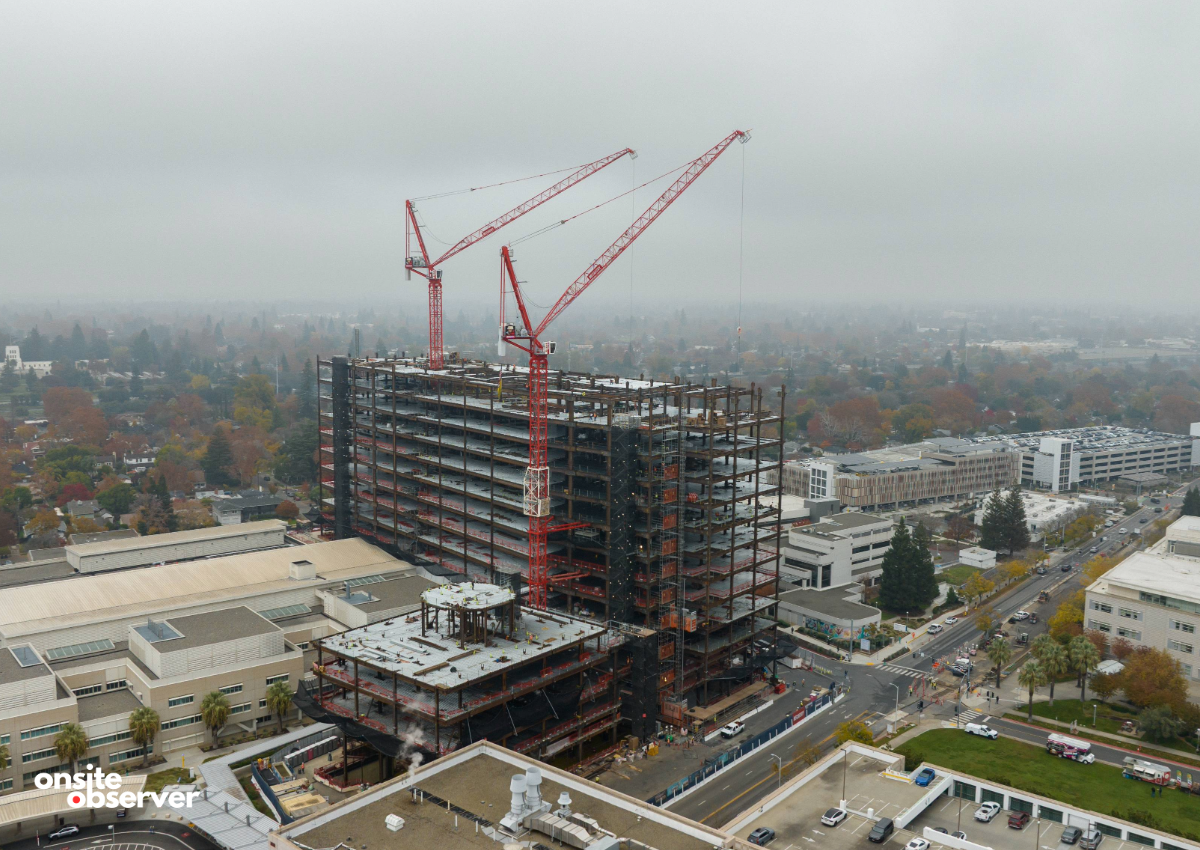
Drive past UC Davis Medical Center today, and it feels like the campus has entered a new era almost overnight. A pair of cranes swing across the sky above X Street, lifting steel into place for a building that didn’t exist a year ago but already dominates the skyline.
Support our work and unlock all articles, project updates, and subscriber-only insights by subscribing to Onsite Observer.
The structure rising is the California Tower, a 14-story project that will replace UC Davis Health’s aging East Wing and lay the foundation for the campus’s next decade of growth.The university formally approved the tower in January 2022. Groundwork followed, and by the summer of 2025, the steel frame began rising.
Onsite Observer’s new aerial footage shows the structure pushing upward floor by floor, now visible well beyond the campus boundary.
When it’s finished, the tower will add roughly 900,000 square feet of new hospital space, including 334 private patient rooms, hybrid operating suites, expanded emergency capacity, and two helipads stacked on the roof. It will stand 237 feet at the roofline and 267 feet at its uppermost point, making it one of the tallest structures in this stretch of Sacramento.
Connected to the tower is a five-story companion building that will serve as the hospital’s front door, with a lobby, family waiting areas, clinical support rooms, and a rooftop garden. The shorter wing is designed to handle the flow of patients and visitors, while the tower carries the bulk of the acute-care functions.
McCarthy Building Companies is leading construction with SmithGroup as the design partner.
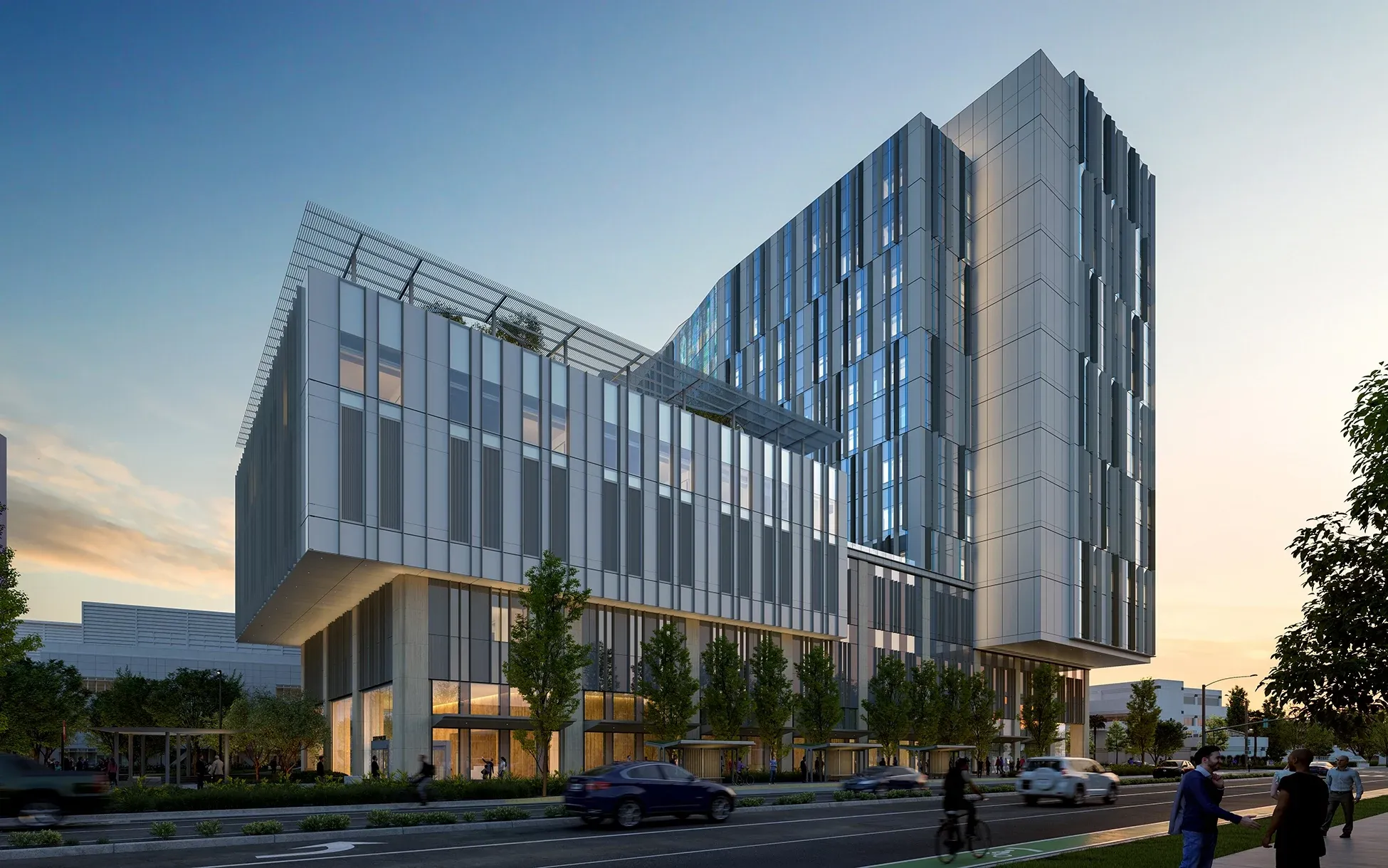

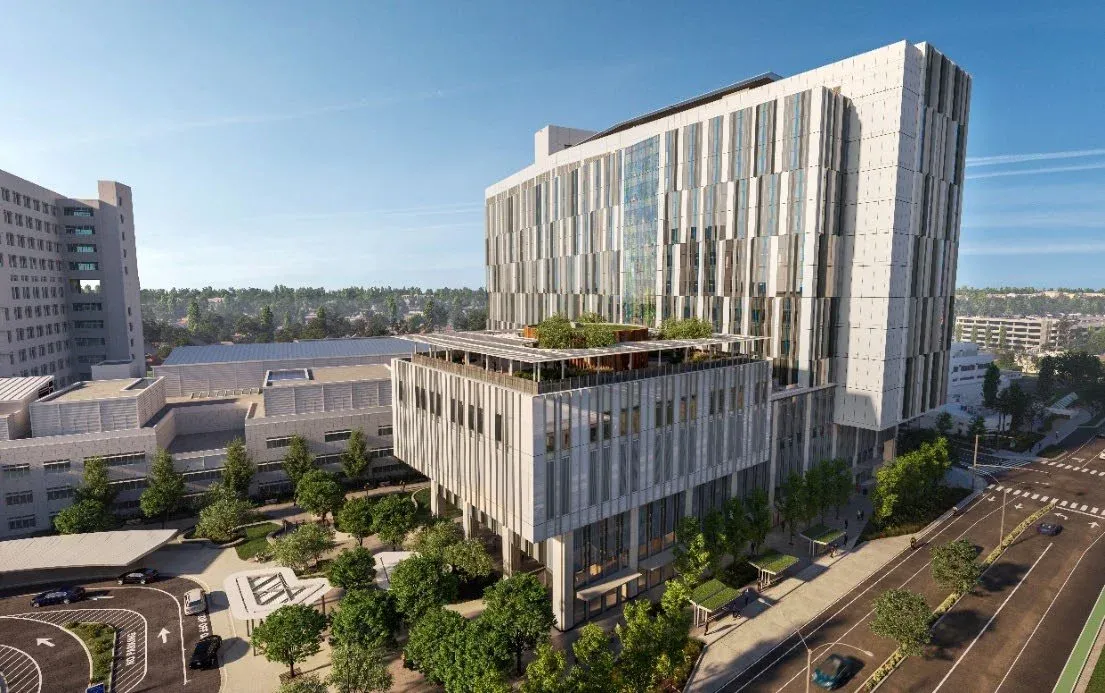
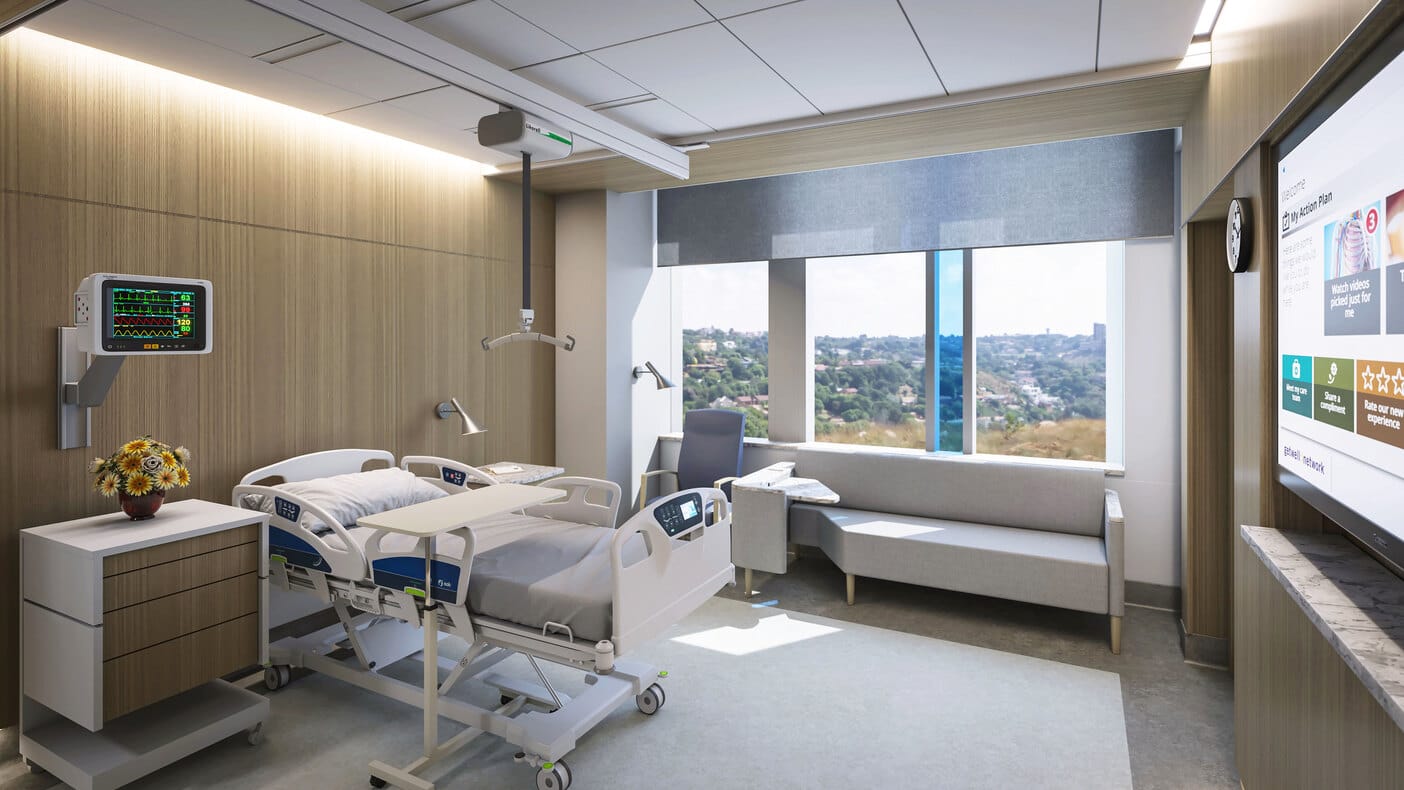
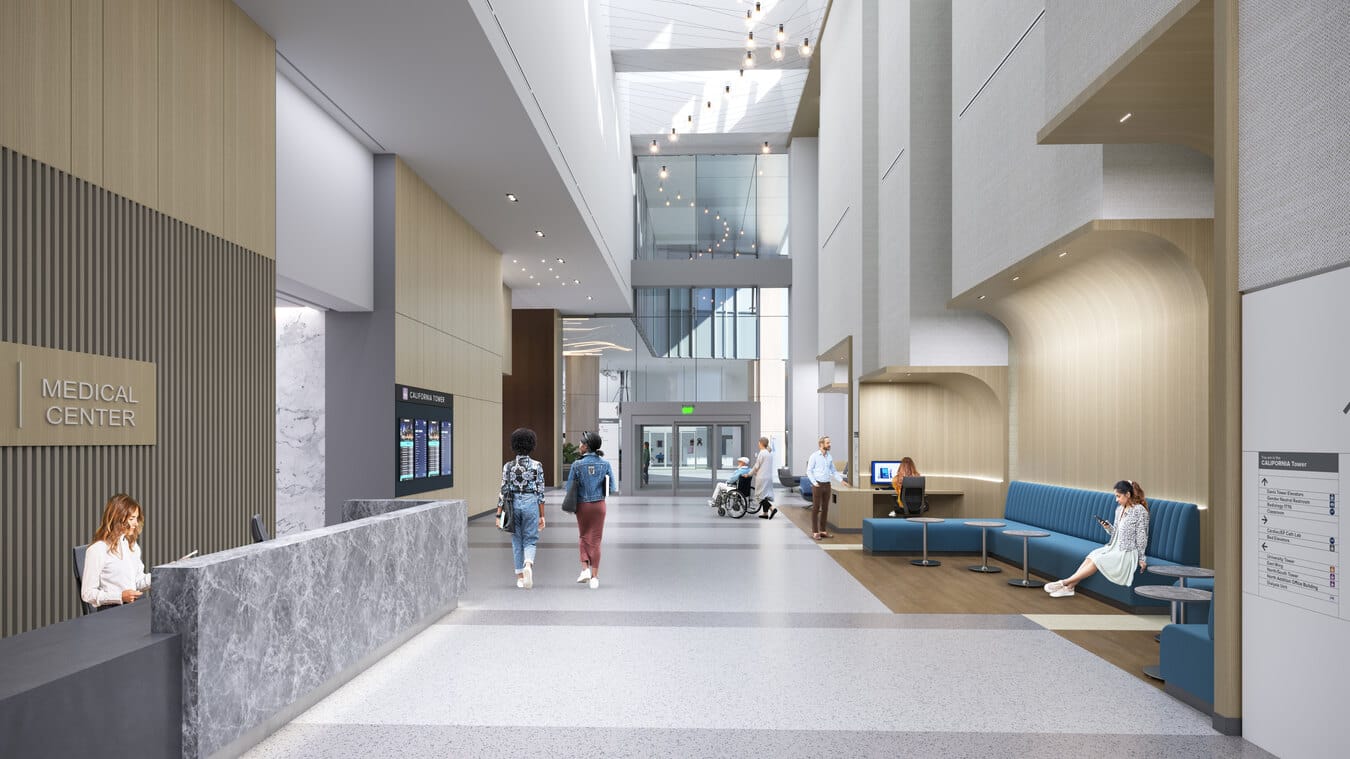
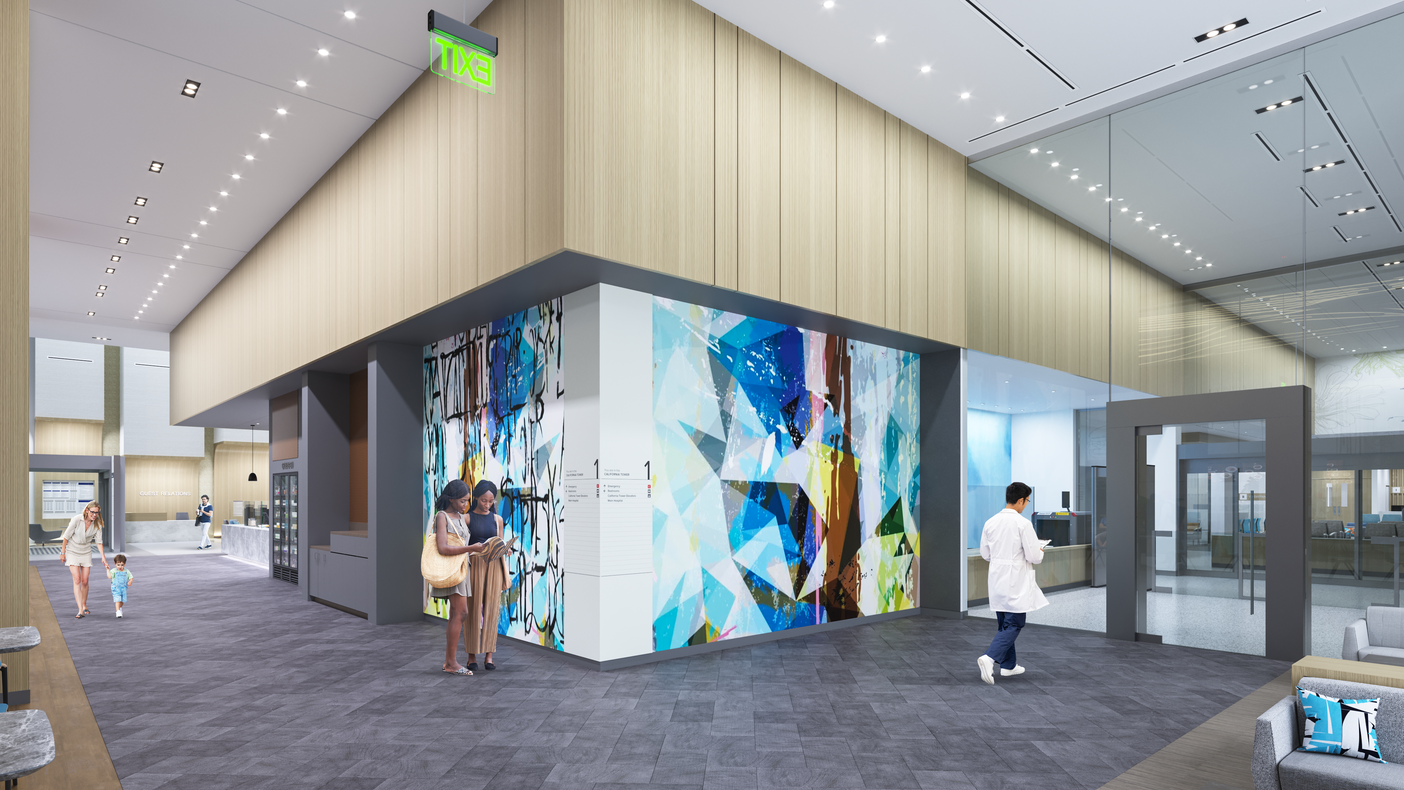
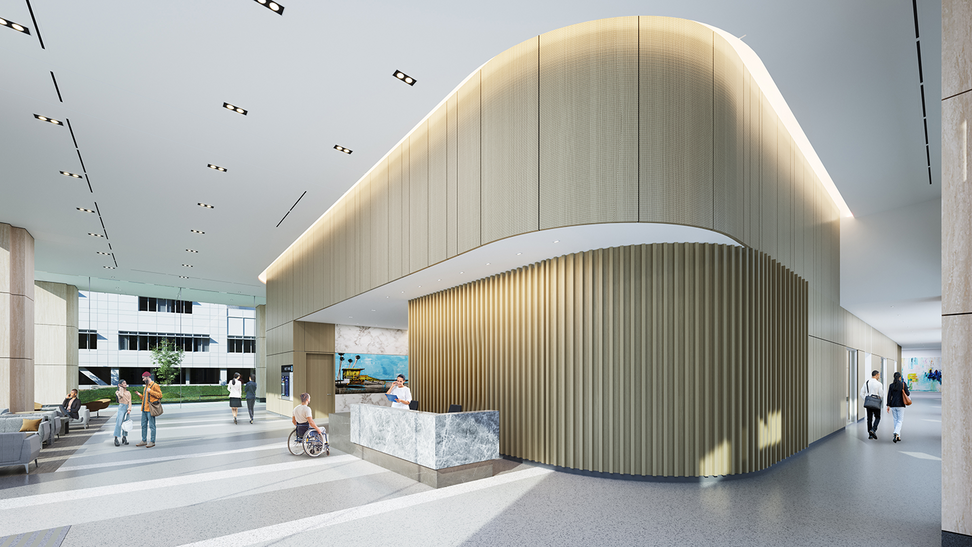
Renderings illustrate the completed vision for UC Davis Health’s California Tower, including exterior views, lobby spaces, and upgraded patient care rooms. Courtesy of SmithGroup and UC Davis Health.
The tower is being built to replace the seismically outdated East Wing, which cannot meet California’s hospital safety law requiring facilities to remain standing and usable after a major earthquake. The mandate dates back to 1994, when lawmakers approved SB 1953 following the Northridge quake, and it set a firm deadline: by Jan. 1, 2030, any hospital building used for acute care must be able to function during and after a serious seismic event. Buildings that can’t meet that bar have to be taken out of service. With the East Wing falling into that category, UC Davis Health plans to demolish it once the new tower opens.
Though the California Tower is a major undertaking on its own, it represents only one piece of a broader expansion plan. UC Davis’ 2030 Vision outlines a buildout that will nearly double the campus footprint, expanding from roughly 3.6 million square feet to more than 7 million by the end of the decade.
Several projects already completed or in progress contribute to that trajectory, including Aggie Square, which opened its first phase this spring. The $1 billion development brings more than 600,000 square feet of research and innovation space to the Stockton Boulevard edge of the campus, along with a 190-unit residential building and a parking structure with roughly 1,500 stalls. The buildings are now occupied by UC Davis programs, industry tenants, and community organizations — the first time the vision for an “innovation district” at this site has fully taken shape.
Aggie Square before its official opening, filmed March 11, 2025.
The California Tower remains the largest piece of the projected growth. Once finished, it will connect to the existing Surgery and Emergency Services Pavilion through more than 60,000 square feet of interior renovation required to maintain uninterrupted emergency and surgical operations.
UC Davis Health continues to project a 2030 opening for the tower, aligning with California’s seismic compliance deadlines.